


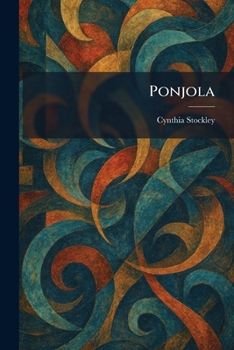
Ponjola

Select Format
Select Condition 
Book Overview
Set against the rugged and unforgiving backdrop of early 20th-century Rhodesia, "Ponjola" is a compelling tale of transformation, addiction, and the quest for redemption. The novel follows the journey of a refined woman who, seeking to escape the constraints of her past and a scandalous heartbreak, disguises herself as a man to navigate the gritty, masculine world of the African gold mines.
The title refers to the local slang for whiskey, a nod to the pervasive influence of alcoholism that haunts the colonial settlers struggling to survive in the harsh environment of the veld. As the protagonist maintains her daring masquerade, she witnesses the destructive power of "ponjola" firsthand while searching for a man she once loved-a man who has been nearly destroyed by the very same vices. Cynthia Stockley's narrative captures the raw, atmospheric beauty of the African wilderness, blending high-stakes adventure with a poignant study of human character.
A classic of colonial literature, "Ponjola" explores profound themes of identity, sacrifice, and the possibility of a fresh start. It remains a vivid portrait of a bygone era and a stirring testament to the resilience of the human spirit in the face of isolation and despair.
This work has been selected by scholars as being culturally important, and is part of the knowledge base of civilization as we know it. This work was reproduced from the original artifact, and remains as true to the original work as possible. Therefore, you may see the original copyright references, library stamps (as most of these works have been housed in our most important libraries around the world), and other notations in the work.
This work is in the public domain in the United States of America, and possibly other nations. Within the United States, you may freely copy and distribute this work, as no entity (individual or corporate) has a copyright on the body of the work.
As a reproduction of a historical artifact, this work may contain missing or blurred pages, poor pictures, errant marks, etc. Scholars believe, and we concur, that this work is important enough to be preserved, reproduced, and made generally available to the public. We appreciate your support of the preservation process, and thank you for being an important part of keeping this knowledge alive and relevant.
Customer Reviews
ThriftBooks® and the ThriftBooks® logo are registered trademarks of Thrift Books Global, LLC
