


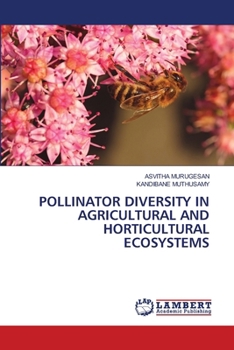
Pollinator Diversity in Agricultural and Horticultural Ecosystems
No Customer Reviews

Co-evolution of flowering plants and their pollinators started about 225 million years ago. The mutualistic plant-pollinator interaction is of central importance since it results in seed and fruit production and therefore key contributors to biodiversity, ecosystem maintenance and essential to economic services. Insects make our world much more interesting. Of the total pollination activities, over 80 per cent is performed by insects and bees contribute nearly 80 per cent of the total insect pollination, and therefore, they are considered the best pollinators. Plants attract pollinators based on their flowers shape, size, colour and nectar guides. Flower shape and colour can provide a clue as to what animals might serve as pollinators for a plant. In addition to producing visually attractive flowers, plants produce fragrant flowers to attract pollinators. About 80 per cent of the world's flowering plants, including one-third of our food crops, depend on these animal pollinators to reproduce. Many types of animals can be pollinators for a wide range of different plants. It include diverse species of Hymenoptera, Diptera, Lepidoptera, Coleoptera and other insects.
Format:Paperback
Language:English
ISBN:6207804961
ISBN13:9786207804962
Release Date:June 2024
Publisher:LAP Lambert Academic Publishing
Length:96 Pages
Weight:0.33 lbs.
Dimensions:0.2" x 6.0" x 9.0"
Customer Reviews
0 rating
Copyright © 2026 Thriftbooks.com
Terms of Use | Privacy Policy | Do Not Sell/Share My Personal Information | Cookie Policy | Cookie Preferences | Accessibility Statement
ThriftBooks ® and the ThriftBooks ® logo are registered trademarks of Thrift Books Global, LLC
ThriftBooks ® and the ThriftBooks ® logo are registered trademarks of Thrift Books Global, LLC
