


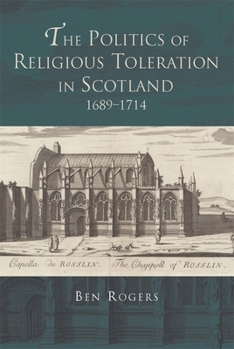
The Politics of Religious Toleration in Scotland, 1689-1714
No Customer Reviews

An examination of the last attempt to enforce Presbyterian religious uniformity across Scotland, and how toleration was perceived on the eve of the Enlightenment. The revolution of 1688-90 was regarded by many as an opportunity to return the Church of Scotland to the Presbyterian uniformity and orthodox Calvinism of earlier generations. These aspirations, however, were undermined by a growing culture of Protestant nonconformity as the Episcopalians, among other dissenting groups, challenged the mono-confessional uniformity that the Presbyterians hoped to achieve. Drawing on recent scholarship on religious toleration, this book explores how interconnected political, intellectual, and social forces reshaped Scotland's religious landscape and forced the Church gradually to concede that its exclusive monopoly on religious worship had ended. It provides new insights into the means by which uniformity was enforced and contested, moving beyond high politics to consider the practical realities of religious co-existence, the challenge presented by heterodoxy, the emergence of a tolerationist movement, the Scottish response to "liberty of conscience", and how the union of 1707 accelerated the collapse of uniformity. In doing so, it reveals how Scotland's reluctant embrace of pluralism contributed to the broader religious diversity of the emerging British state.
Format:Hardcover
Language:English
ISBN:1783277939
ISBN13:9781783277933
Release Date:January 1
Publisher:Boydell Press
Length:240 Pages
Customer Reviews
0 rating
Copyright © 2026 Thriftbooks.com Terms of Use
| Privacy Policy | Do Not
Sell/Share My Personal Information | Cookie Policy | Cookie Preferences | Accessibility Statement
ThriftBooks® and the ThriftBooks® logo are registered trademarks of Thrift Books Global, LLC
ThriftBooks® and the ThriftBooks® logo are registered trademarks of Thrift Books Global, LLC
