


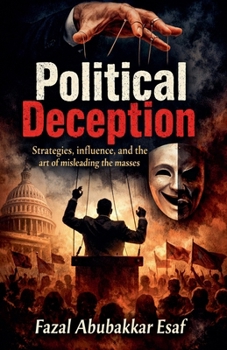
Political Deception

In an era where information travels instantly across borders and platforms, truth itself has become a contested terrain. Political narratives are constructed, contested, amplified, and sometimes deliberately distorted. In such an environment, understanding political deception is no longer optional-it is essential.
This book emerged from a fundamental question: How do leaders, governments, and institutions shape perceived reality while concealing their true intentions? More importantly, how can these mechanisms be understood, analyzed, and countered?
By integrating insights from history, psychology, political science, strategic studies, and modern technological developments, this work aims to provide a comprehensive framework for understanding the machinery of deception in politics.
The chapters that follow explore deception not merely as manipulation, but as a strategic instrument of power-one that has been used by empires, political movements, intelligence agencies, and modern digital networks alike.
From ancient statecraft to contemporary information warfare, the book examines the patterns, tactics, and psychological mechanisms that shape political perception.
Customer Reviews
ThriftBooks ® and the ThriftBooks ® logo are registered trademarks of Thrift Books Global, LLC
