


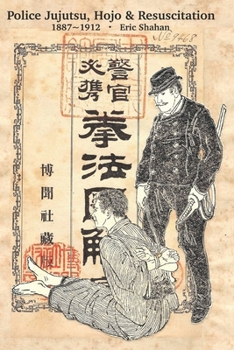
Police Jujutsu, Hojo & Resuscitation

A Comparison of Two Illustrated Japanese Police Jujutsu Manuals
This book pairs two illustrated Japanese police jujutsu manuals, published in 1887 and 1898. Both document the sixteen standardized Jujutsu techniques developed for the Japanese police, along with hojo (rope-binding) and resuscitation techniques. These methods remained part of police martial-arts training until 1912, when jujutsu was replaced by judo.
Following the Meiji Restoration in 1868, Japan established a modern police force and sought a standardized martial-arts system for its officers. In 1883, representatives from several jujutsu schools formed a Jujutsu Consulting Group to develop such a system. After comparing techniques from different schools, they selected sixteen techniques suited to situations police officers were likely to encounter. Seven rope-binding techniques and five resuscitation methods were also included.
The first manual, The Police Officer's Essential Illustrated Guide: Kenpo, was published in 1887. In 1898, Inoguchi Matsunosuke consulted with the original author, Hisatomi, and received permission to produce an expanded edition. Inoguchi commissioned new illustrations and greatly expanded the explanations, publishing Kenpo: An Illustrated Instructor's Manual later that year.
Although both books contain the same sixteen techniques, their emphasis differs. The 1887 edition focuses more directly on police work, while the 1898 edition presents the techniques more broadly as a system of self-defense.
Each technique is presented twice in this book: first in Hisatomi's 1887 version, followed by Inoguchi's 1898 version. Together, they illustrate how Japanese police jujutsu was documented and presented during the final decades of the Meiji period.
Related Subjects
HistoryCustomer Reviews
ThriftBooks ® and the ThriftBooks ® logo are registered trademarks of Thrift Books Global, LLC
