


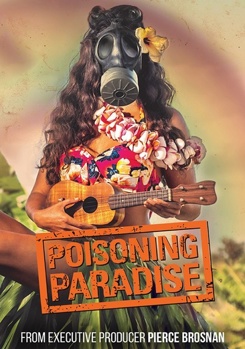
Poisoning Paradise

In an attempt to diversify an economy that was overly reliant on tourism, policymakers in both Hawaii and Washington, D.C. encouraged the world's largest biotech companies to utilize Kauai's favorable climate and fertile soil to test genetically engineered seeds and crops. Corporations including Syngenta, Pioneer DuPont, BASF, and Dow Agrosciences have since applied hundreds of tons of Restricted Use (RU) pesticides on thousands of acres across the Garden Island's West Side, the traditional homeland of an indigenous and disenfranchised population.
Interviews with local residents, scientists, and healthcare professionals reveal the hardships and ecological dangers of intensive and continuous pesticide applications and the environmental injustice thrust upon people living in one of the most sacred, biologically unique and diverse locations on earth. Award-winning investigative journalist Paul Kolberstein describes Kauai as "one of the most toxic agricultural environments in all of American agriculture."
As champions of a grassroots movement to make Kauai County Bill 2491 law, local activists battle political corruption, corporate bullying, and systematic concealment by the agrichemical industry.
Although Kauai's plight might seem like a local issue, this debate is in fact raging around the world as country after country is becoming concerned about pesticides, the future of food, and sustainable farming practices.
Related Subjects
DocumentaryCustomer Reviews
ThriftBooks ® and the ThriftBooks ® logo are registered trademarks of Thrift Books Global, LLC
