


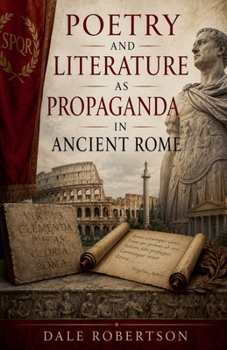
Poetry and Literature as Propaganda in Ancient Rome

This book explores that transformation, tracing the evolution of Roman literature as an ideological battleground and a tool of political legitimization across more than half a millennium. Across twenty-one substantive chapters, this study moves chronologically and thematically from the existential crises of the Late Republic, through the golden noon of Augustan mythmaking, into the claustrophobic tyrannies of the Silver Age, and ultimately to the transformation of classical forms to serve a Christianized empire in Late Antiquity. By allocating substantial space to each epoch, this work seeks to analyze not only the direct, overt praise of rulers but also the subtle, structural ways in which literary genres-epic, lyric, elegy, satire, history, and panegyric-were adapted to naturalize imperial dominion, redefine cultural memory, and enforce moral conformity.
Customer Reviews
ThriftBooks ® and the ThriftBooks ® logo are registered trademarks of Thrift Books Global, LLC
