


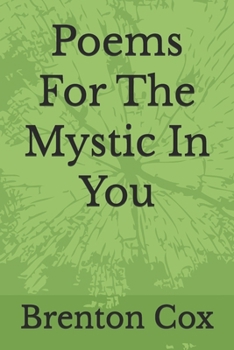
Poems For The Mystic In You

Seemingly, a mystic is a rarity. Such a person can be hard to find. There's not too many of us that opt for 'mystic' as a career path these days. The term itself is somewhat vague and fluid, much like the deeper dimension to which it connects. According to an Oxford Languages definition, a 'mystic' is a person who "seeks by contemplation and self-surrender to obtain unity with or absorption into the Deity or the absolute, or who believes in the spiritual apprehension of truths that are beyond the intellect."
The second part of the definition is most relevant. For the purposes of this book, we're interested in the idea that each of us can 'relate' to deeper truths, even if we're intellectually stumped by them. We may not see ourselves as fully qualified, card-carrying, cave-dwelling mystics but perhaps that's what we are, at least in part. I believe that we have a different form of intelligence within us that is, indeed, mystical by nature. It's at the heart of our being and if the theory is correct, it means that we have a foundational font of knowing that we can tap into. It is this central part - the 'mystic in you' - that I'd like to engage with.
One of the difficulties we face though, with this sort of endeavour, is the fact that language can be frustratingly inadequate when we're trying to communicate deeper concepts. How do we explain the outwardly unexplainable in written form? This is where poetry can help. We can use the inspired but (sometimes) veiled language of poems to shine a light and show the way. The analogies and expressions of poetic verses can act as pointers. At the very least, they can nudge us towards the divine.
Related Subjects
Religion Religion & Spirituality Self Help Self-Help Self-Help & Psychology SpiritualityCustomer Reviews
ThriftBooks ® and the ThriftBooks ® logo are registered trademarks of Thrift Books Global, LLC
