


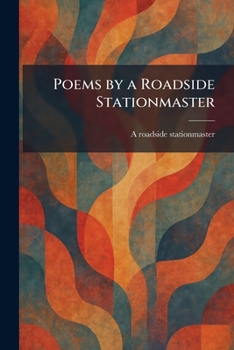
Poems by a Roadside Stationmaster

"Poems by a Roadside Stationmaster" is an evocative collection of verse that captures the quiet observations and daily reflections of a life lived alongside the railway lines of early 20th-century Scotland. Written by an author whose identity is intimately tied to their profession, these poems provide a unique glimpse into the intersections of industrial labor, pastoral beauty, and the transient nature of travel.
The collection explores themes of duty, the changing seasons, and the diverse individuals who pass through a rural station. From the rhythmic arrival of steam engines to the stillness of the countryside during the night shift, the poems balance the technical reality of the railroad with a deep appreciation for the landscape. The author's voice is one of humble contemplation, turning the mundane tasks of a stationmaster into moments of lyrical beauty.
This volume serves as a significant historical and literary document, offering readers a rare perspective on the age of rail through the eyes of someone who witnessed its daily operation first-hand. It is a poignant reminder of a bygone era, celebrating the quiet dignity of work and the enduring power of the written word to find art in everyday surroundings.
This work has been selected by scholars as being culturally important, and is part of the knowledge base of civilization as we know it. This work was reproduced from the original artifact, and remains as true to the original work as possible. Therefore, you may see the original copyright references, library stamps (as most of these works have been housed in our most important libraries around the world), and other notations in the work.
This work is in the public domain in the United States of America, and possibly other nations. Within the United States, you may freely copy and distribute this work, as no entity (individual or corporate) has a copyright on the body of the work.
As a reproduction of a historical artifact, this work may contain missing or blurred pages, poor pictures, errant marks, etc. Scholars believe, and we concur, that this work is important enough to be preserved, reproduced, and made generally available to the public. We appreciate your support of the preservation process, and thank you for being an important part of keeping this knowledge alive and relevant.
Customer Reviews
ThriftBooks ® and the ThriftBooks ® logo are registered trademarks of Thrift Books Global, LLC
