


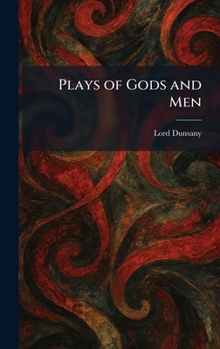
Plays of Gods and Men

"Plays of Gods and Men" is a captivating collection of four dramatic works by the visionary Irish writer Lord Dunsany. Combining elements of fantasy, ancient myth, and suspenseful irony, these plays explore the thin veil between the human world and the domain of the divine. The collection features some of Dunsany's most celebrated theatrical achievements, including the chilling suspense of "A Night at an Inn" and the tragic hubris found in "The Laughter of the Gods."
In "The Tents of the Arabs", Dunsany explores themes of freedom and the longing for a simpler life, while "The Queen's Enemies" presents a dark tale of vengeance in an ancient Egyptian setting. Throughout the volume, Dunsany employs his signature rhythmic prose and atmospheric world-building to create stories that feel both timeless and legendary. These works showcase the author's unique ability to weave together the mundane and the supernatural, making them essential reading for fans of early fantasy and classic drama. Rich in imagery and philosophical depth, "Plays of Gods and Men" remains a testament to Lord Dunsany's enduring influence on the literature of the fantastic.
This work has been selected by scholars as being culturally important, and is part of the knowledge base of civilization as we know it. This work was reproduced from the original artifact, and remains as true to the original work as possible. Therefore, you may see the original copyright references, library stamps (as most of these works have been housed in our most important libraries around the world), and other notations in the work.
This work is in the public domain in the United States of America, and possibly other nations. Within the United States, you may freely copy and distribute this work, as no entity (individual or corporate) has a copyright on the body of the work.
As a reproduction of a historical artifact, this work may contain missing or blurred pages, poor pictures, errant marks, etc. Scholars believe, and we concur, that this work is important enough to be preserved, reproduced, and made generally available to the public. We appreciate your support of the preservation process, and thank you for being an important part of keeping this knowledge alive and relevant.
Related Subjects
DramaCustomer Reviews
ThriftBooks ® and the ThriftBooks ® logo are registered trademarks of Thrift Books Global, LLC
