


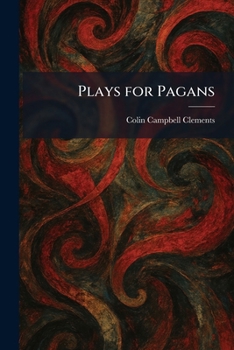
Plays for Pagans

"Plays for Pagans" is a compelling collection of one-act plays by the American dramatist Colin Campbell Clements. This anthology showcases the versatility and creative depth of early 20th-century theater, offering a series of diverse dramatic works that range from lighthearted comedies to poignant dramas. The collection includes notable pieces such as "The Haiduc," "Harlequin," "Yesterday," "Spring ," and "Four Who Were Blind," each demonstrating Clements' keen ear for dialogue and his ability to craft evocative stage settings within a condensed format.
Throughout the volume, Clements explores themes of human nature, romantic longing, and the complexities of the modern world. His writing reflects the experimental spirit of the era, prioritizing character development and atmospheric storytelling. Whether capturing the whimsical antics of commedia dell'arte figures or the gritty realities of folk legends, these plays remain significant examples of the vibrant American theatrical landscape of the 1920s. Ideal for students of drama, performers looking for short scenes, and readers of classic literature, "Plays for Pagans" provides a window into the evolution of the one-act play as a sophisticated literary form.
This work has been selected by scholars as being culturally important, and is part of the knowledge base of civilization as we know it. This work was reproduced from the original artifact, and remains as true to the original work as possible. Therefore, you may see the original copyright references, library stamps (as most of these works have been housed in our most important libraries around the world), and other notations in the work.
This work is in the public domain in the United States of America, and possibly other nations. Within the United States, you may freely copy and distribute this work, as no entity (individual or corporate) has a copyright on the body of the work.
As a reproduction of a historical artifact, this work may contain missing or blurred pages, poor pictures, errant marks, etc. Scholars believe, and we concur, that this work is important enough to be preserved, reproduced, and made generally available to the public. We appreciate your support of the preservation process, and thank you for being an important part of keeping this knowledge alive and relevant.
Related Subjects
DramaCustomer Reviews
ThriftBooks ® and the ThriftBooks ® logo are registered trademarks of Thrift Books Global, LLC
