


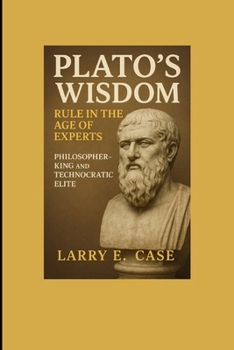
Plato's Wisdom Rule in the Age of Experts: : Philosopher -King and Technocratic Elite

This scholarly work explores the enduring tension between wisdom-driven governance and democratic participation, using Plato's concept of the philosopher-king as a foundation for examining modern technocratic rule. It begins by revisiting Plato's Republic, where the ideal ruler is a philosopher: someone who seeks truth, possesses moral integrity, and governs not for personal gain but for the good of the city. Plato's skepticism of democracy, which he saw as swayed by emotion and ignorance, provides a stark contrast to contemporary ideals of popular sovereignty.
The book then transitions to the rise of technocracy in the 20th and 21st centuries, where experts-engineers, economists, scientists, and bureaucrats-play central roles in decision-making. Unlike Plato's philosophers, modern technocrats derive legitimacy from technical skill, not philosophical contemplation. Yet both claim authority based on superior knowledge.
Chapters compare these two forms of rule, highlighting key themes: the distinction between wisdom and technical expertise; the challenges of legitimacy and consent in expert-led systems; and the tension between rational governance and democratic inclusion. Through case studies from Europe, China, and global responses to crises like the COVID-19 pandemic, the book reveals how technocratic power operates in real-world political systems.
Ethical concerns are also addressed, including the risks of epistemic arrogance, detachment from ordinary citizens, and the erosion of accountability. The work stresses the importance of education in cultivating both leadership and informed citizenship, arguing that moral development must accompany technical training for those in positions of influence.
In its final chapters, the book envisions new models of governance that blend Plato's concern for wisdom with modern demands for transparency, participation, and justice. Rather than replacing democracy with expertise, it calls for institutions that foster dialogue between experts and the public, ensuring that decisions are both informed and legitimate.
Ultimately, From Philosopher-Kings and Technocratic Elites invites readers to rethink who should govern-and how-in a world where knowledge is both powerful and contested.
Related Subjects
PhilosophyCustomer Reviews
ThriftBooks ® and the ThriftBooks ® logo are registered trademarks of Thrift Books Global, LLC
