


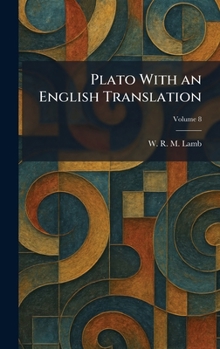
Plato With an English Translation

"Plato With an English Translation", Volume 8, provides a critical collection of dialogues attributed to one of the most foundational figures in Western philosophy. Translated by W. R. M. Lamb, this volume offers readers access to the intricate dialectical explorations and ethical inquiries that define Plato's body of work. The dialogues included in this collection delve into essential human questions, ranging from the nature of virtue and self-discipline to the complexities of political governance and the pursuit of wisdom.
Through the rigorous use of the Socratic method, these texts demonstrate the evolution of ancient Greek logic and metaphysics. The work captures the intellectual rigor of Athens, presenting a series of encounters that challenge the reader to examine the definitions of justice, temperance, and the soul. As a central pillar of classical studies, this volume is an indispensable resource for understanding the roots of modern philosophical discourse. It serves as both a primary text for scholars and a compelling introduction for those seeking to engage with the profound themes that have shaped the intellectual heritage of the West for over two millennia.
This work has been selected by scholars as being culturally important, and is part of the knowledge base of civilization as we know it. This work was reproduced from the original artifact, and remains as true to the original work as possible. Therefore, you may see the original copyright references, library stamps (as most of these works have been housed in our most important libraries around the world), and other notations in the work.
This work is in the public domain in the United States of America, and possibly other nations. Within the United States, you may freely copy and distribute this work, as no entity (individual or corporate) has a copyright on the body of the work.
As a reproduction of a historical artifact, this work may contain missing or blurred pages, poor pictures, errant marks, etc. Scholars believe, and we concur, that this work is important enough to be preserved, reproduced, and made generally available to the public. We appreciate your support of the preservation process, and thank you for being an important part of keeping this knowledge alive and relevant.
Related Subjects
PhilosophyCustomer Reviews
ThriftBooks ® and the ThriftBooks ® logo are registered trademarks of Thrift Books Global, LLC
