


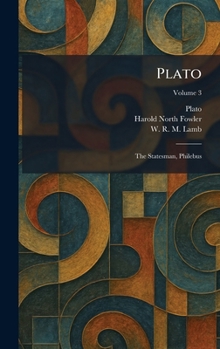
Plato: The Statesman, Philebus

"The Statesman" and "Philebus" represent two of Plato's most profound explorations into the realms of political philosophy and ethical inquiry. In "The Statesman", Plato utilizes the dialectical method of division to define the nature of the true ruler. The dialogue navigates the complex relationship between law and the flexible wisdom of the ideal statesman, seeking to understand the "royal art" of governance and how it differs from the roles of the orator, the judge, and the general.
In "Philebus", the focus shifts to the individual's pursuit of the good life. Through a rigorous examination led by Socrates, the dialogue weighs the competing claims of pleasure and wisdom as the primary source of human happiness. Plato introduces a sophisticated ontological framework to categorize different types of pleasure and knowledge, ultimately concluding that the most desirable life is one of harmony, measure, and intellectual pursuit. Together, these works provide a detailed look at Plato's later thought, offering timeless observations on the structures of society and the moral responsibilities of the individual. They are fundamental texts for understanding the development of Western logic, ethics, and political theory.
This work has been selected by scholars as being culturally important, and is part of the knowledge base of civilization as we know it. This work was reproduced from the original artifact, and remains as true to the original work as possible. Therefore, you may see the original copyright references, library stamps (as most of these works have been housed in our most important libraries around the world), and other notations in the work.
This work is in the public domain in the United States of America, and possibly other nations. Within the United States, you may freely copy and distribute this work, as no entity (individual or corporate) has a copyright on the body of the work.
As a reproduction of a historical artifact, this work may contain missing or blurred pages, poor pictures, errant marks, etc. Scholars believe, and we concur, that this work is important enough to be preserved, reproduced, and made generally available to the public. We appreciate your support of the preservation process, and thank you for being an important part of keeping this knowledge alive and relevant.
Related Subjects
PhilosophyCustomer Reviews
ThriftBooks ® and the ThriftBooks ® logo are registered trademarks of Thrift Books Global, LLC
