


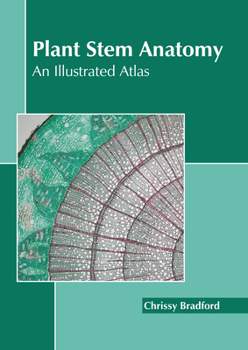
Plant Stem Anatomy: An Illustrated Atlas
No Customer Reviews

A stem refers to one of the primary structural axes of a vascular plant, while the other part is root. It provides support to fruits, leaves and flowers. It is also responsible for generating new living tissue, storing nutrients, and transporting water and dissolved substances among the shoots and roots in the phloem and xylem. There are two parts of the stem which include nodes and internodes. The majority of plants have stems that are above ground whereas certain plants contain underground stems. There are three types of tissues found in a stem, namely, vascular tissue, dermal tissue and ground tissue. The dermal tissue normally covers the exterior surface of the stem and is responsible for protecting, waterproofing and regulating gas exchange. The ground tissue is primarily made up of parenchyma cells and surrounds the vascular tissue. It occasionally plays a role in the process of photosynthesis. Vascular tissue is responsible for long-distance transport as well as structural support. This book provides comprehensive insights into the anatomy of the plant stem. It is an essential guide for both academicians and those who wish to pursue this discipline further.
Format:Hardcover
Language:English
ISBN:1641167548
ISBN13:9781641167543
Release Date:September 2023
Publisher:Callisto Reference
Length:191 Pages
Weight:1.63 lbs.
Dimensions:0.5" x 8.5" x 11.0"
Customer Reviews
0 rating
Copyright © 2026 Thriftbooks.com
Terms of Use | Privacy Policy | Do Not Sell/Share My Personal Information | Cookie Policy | Cookie Preferences | Accessibility Statement
ThriftBooks ® and the ThriftBooks ® logo are registered trademarks of Thrift Books Global, LLC
ThriftBooks ® and the ThriftBooks ® logo are registered trademarks of Thrift Books Global, LLC
