


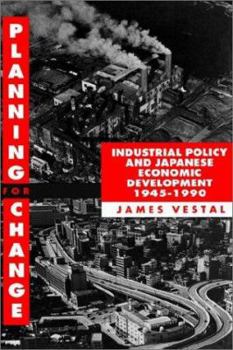
Planning for Change: Industrial Policy and Japanese Economic Development 1945-1990
No Customer Reviews

Select Format
Select Condition 
Book Overview
In addition to providing an overview of Japanese development and industrial policy measures used during the 1945-1990 period, this book assesses the contribution that industrial policy made to Japan's phenomenal economic success. James Vestal concludes that a stable, gradual, and long term perspective was key to Japan's development, rather than "picking winners." Policy makers selectively blocked competition in inefficient sectors in order to maintain employment, which was necessary given that Japan's productive capital was decimated in the war. Barriers to competition were raised as the Japanese economy became able to provide full employment at above subsistence wages. Given the enormous upheaval associated with introducing a competitive market structure, the Japanese case has important lessons for Russia and Eastern European nations today.
Format:Hardcover
Language:English
ISBN:B004VSHGRM
ISBN13:9780198288084
Release Date:January 1994
Publisher:OUP Oxford
Length:256 Pages
Weight:1.40 lbs.
Dimensions:0.8" x 6.0" x 9.0"
Customer Reviews
0 rating
Copyright © 2026 Thriftbooks.com
Terms of Use | Privacy Policy | Do Not Sell/Share My Personal Information | Cookie Policy | Cookie Preferences | Accessibility Statement
ThriftBooks ® and the ThriftBooks ® logo are registered trademarks of Thrift Books Global, LLC
ThriftBooks ® and the ThriftBooks ® logo are registered trademarks of Thrift Books Global, LLC
