


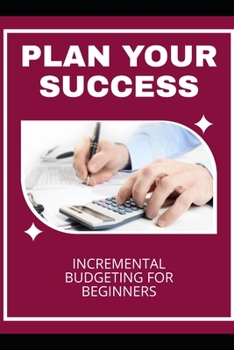
Plan Your Success: Incremental Budgeting for Beginners
No Customer Reviews

Understanding Incremental Budgeting Incremental budgeting is a traditional approach to budgeting in which the previous year's budget serves as the base, with incremental changes made for the new budget period. This methodology is often used in both public and private sectors due to its simplicity and ease of implementation. By focusing on small adjustments rather than a complete overhaul, incremental budgeting allows organizations to maintain a stable financial foundation while addressing new needs and priorities. The primary characteristic of incremental budgeting is its reliance on historical financial data. Each year, a budget is created by taking the previous year's budget and adding or subtracting incremental amounts based on expected changes. These adjustments can be influenced by various factors such as inflation, changes in operational costs, or shifts in organizational priorities. This approach ensures continuity and consistency, making it easier to predict future financial needs. To implement incremental budgeting, organizations typically begin by reviewing the previous year's budget and identifying areas where adjustments are needed. These adjustments may be based on factors such as inflation, changes in revenue, or shifts in organizational goals. Once the necessary changes have been identified, they are incorporated into the new budget, which is then reviewed and approved by relevant stakeholders. Regular monitoring and evaluation are essential to ensure the budget remains aligned with organizational objectives. When using incremental budgeting, it is crucial to strike a balance between maintaining financial stability and addressing changing needs. Organizations should regularly review their financial performance and adjust their budget as needed to ensure resources are allocated effectively. Additionally, fostering a culture of continuous improvement can help identify and address inefficiencies, ensuring the organization remains agile and responsive to new challenges. Compared to other budgeting methods, such as zero-based budgeting or activity-based budgeting, incremental budgeting is less resource-intensive and easier to implement. However, it may not be as effective in identifying and eliminating inefficiencies. Organizations should carefully consider their unique needs and circumstances when selecting a budgeting approach, as different methods may be more suitable for different situations. Incremental budgeting is a widely used approach that offers simplicity and stability, making it an attractive option for many organizations. However, it is essential to be aware of its limitations and take steps to address potential inefficiencies. By regularly reviewing and adjusting their budget, organizations can ensure they remain financially resilient and responsive to changing needs. CONTENTS: - Understanding Incremental Budgeting
◦ The Basics of Incremental Budgeting
◦ The Importance of Incremental Budgeting in Businesses
- Historical Overview of Incremental Budgeting
◦ Emergence of Incremental Budgeting
◦ Shifts and Trends in Incremental Budgeting
- Incremental Budgeting vs. Zero-Based Budgeting
◦ Basic Differences
◦ Comparative Benefits
- Process of Incremental Budgeting
◦ Core Steps in Incremental Budgeting
◦ Identifying Key Budgeting Areas
- Incremental Budgeting Models
◦ Understanding the Fixed and Variable Nature of Incremental Budgeting
◦ Case Studies of Different Models
- Importance of Incremental Budgeting in Cost Prediction
◦ Predictability and Ease of Use
◦ Long-term Benefits
- Participation in Incremental Budgeting
◦ Involved Personnel and Teams
◦ Devolvement of Responsibility + MORE
◦ The Basics of Incremental Budgeting
◦ The Importance of Incremental Budgeting in Businesses
- Historical Overview of Incremental Budgeting
◦ Emergence of Incremental Budgeting
◦ Shifts and Trends in Incremental Budgeting
- Incremental Budgeting vs. Zero-Based Budgeting
◦ Basic Differences
◦ Comparative Benefits
- Process of Incremental Budgeting
◦ Core Steps in Incremental Budgeting
◦ Identifying Key Budgeting Areas
- Incremental Budgeting Models
◦ Understanding the Fixed and Variable Nature of Incremental Budgeting
◦ Case Studies of Different Models
- Importance of Incremental Budgeting in Cost Prediction
◦ Predictability and Ease of Use
◦ Long-term Benefits
- Participation in Incremental Budgeting
◦ Involved Personnel and Teams
◦ Devolvement of Responsibility + MORE
Format:Paperback
Language:English
ISBN:B0HFJVCQK8
ISBN13:9798306525389
Release Date:August 2026
Publisher:Independently Published
Length:162 Pages
Weight:0.50 lbs.
Dimensions:0.3" x 6.0" x 9.0"
Customer Reviews
0 rating
Copyright © 2026 Thriftbooks.com
Terms of Use | Privacy Policy | Do Not Sell/Share My Personal Information | Cookie Notice | Cookie Preferences | Accessibility Statement
ThriftBooks ® and the ThriftBooks ® logo are registered trademarks of Thrift Books Global, LLC
ThriftBooks ® and the ThriftBooks ® logo are registered trademarks of Thrift Books Global, LLC
