


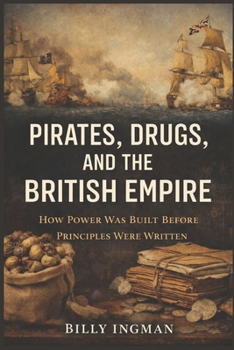
Pirates, Drugs, and the British Empire: How Power Was Built Before Principles Were Written

The British Empire is often remembered as a story of civilisation, law, and moral leadership.
This book asks a simpler question: what actually made it powerful?
Pirates, Drugs, and the British Empire strips away the comforting myths and follows the systems that built Britain's global dominance long before principles entered the conversation.
This is not a book about statues, apologies, or modern political arguments.
It is a clear-eyed examination of how power really works.
Inside, you'll discover how:
Piracy was quietly encouraged before it was criminalised
Tea addiction destabilised Britain's finances and reshaped global trade
Opium was used to "solve" trade imbalances - until gunboats enforced the solution
Slavery generated immense wealth long before it became morally inconvenient
Corporations ruled like states, with armies, laws, and profit targets
Credit, debt, and paperwork allowed Britain to outlast richer rivals
Law, information, and moral narratives replaced conquest as tools of control
Rather than judging the past by modern standards, this book explains why the past unfolded the way it did. It shows how empire expanded through incentives, improvisation, and opportunism, and how moral language arrived later, once the machinery was already in place.
Written in a relaxed, accessible, and quietly sharp tone, this book avoids academic jargon while remaining intellectually rigorous. It treats the reader as an adult, capable of holding uncomfortable truths without needing outrage or apology.
You won't be told what to think.
You'll be shown how the system worked.
And once you see it, you'll start noticing the pattern everywhere.
Because the British Empire didn't begin with ideals.
It acquired them once power was secure, and the bill came due.
If you're interested in history, power, economics, or the uncomfortable mechanics behind global dominance, this book will change how you see empire and how you recognise it when it appears again, under a different name.
Customer Reviews
ThriftBooks® and the ThriftBooks® logo are registered trademarks of Thrift Books Global, LLC
