


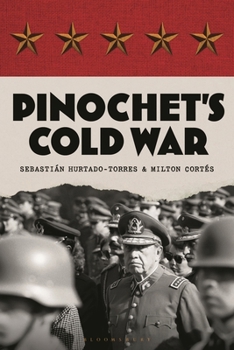
Pinochet's Cold War
No Customer Reviews

Select Format
Select Condition 
Book Overview
This book analyses how Augusto Pinochet's dictatorship in Chile interacted with different actors of the international system during the Cold War.
As one of the first English language books to analyse the Chile's foreign relations during the Cold War, this book argues that the Pinochet regime was an emblematic phenomenon of the Cold War, with foreign actors involving themselves or directly intervening in matters of a traditionally domestic nature. The authors argue that the overthrow of Salvador Allende and the establishment of a military dictatorship in the wake of his death came to represent significant landmarks not only in the history of Chile, but also of the global Cold War. It focuses on Chile's relationship with three key geographical and political entities: Latin America, especially Chile's neighbours; the Western world; and the Socialist bloc. By analysing Chile's relations with these entities, the authors illustrate Chile's unique experiences during this period and offer valuable insight into its experience of the Cold War. Filling an important gap in the literature of the Cold War and Latin America, Pinochet's Cold War masterfully shows how Chile was a product, a stage, and an emblem of the Cold War.Format:Hardcover
Language:English
ISBN:B0HPBNYJ5H
ISBN13:9798765149010
Release Date:August 2027
Publisher:Bloomsbury Academic
Length:304 Pages
Weight:1.00 lbs.
Dimensions:9.0" x 1.0" x 6.0"
Customer Reviews
0 rating
Copyright © 2026 Thriftbooks.com
Terms of Use | Privacy Policy | Do Not Sell/Share My Personal Information | Cookie Notice | Cookie Preferences | Accessibility Statement
ThriftBooks ® and the ThriftBooks ® logo are registered trademarks of Thrift Books Global, LLC
ThriftBooks ® and the ThriftBooks ® logo are registered trademarks of Thrift Books Global, LLC
