


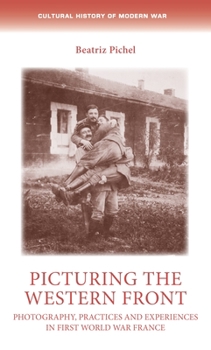
Picturing the Western Front: Photography, Practices and Experiences in First World War France
No Customer Reviews

Between 1914 and 1918, military, press and amateur photographers produced thousands of pictures. Either classified in military archives specially created with this purpose in 1915, collected in personal albums or circulated in illustrated magazines, photographs were supposed to tell the story of the war. Picturing the Western Front argues that photographic practices also shaped combatants and civilians' war experiences. Doing photography (taking pictures, posing for them, exhibiting, cataloguing and looking at them) allowed combatants and civilians to make sense of what they were living through. Photography mattered because it enabled combatants and civilians to record events, establish or reinforce bonds with one another, represent bodies, place people and events in imaginative geographies and making things visible, while making others, such as suicide, invisible. Photographic practices became, thus, frames of experience.
Format:Hardcover
Language:English
ISBN:1526151901
ISBN13:9781526151902
Release Date:May 2021
Publisher:Manchester University Press
Length:272 Pages
Weight:1.02 lbs.
Dimensions:0.6" x 5.5" x 8.5"
Customer Reviews
0 rating
Copyright © 2026 Thriftbooks.com Terms of Use
| Privacy Policy | Do Not
Sell/Share My Personal Information | Cookie Policy | Cookie Preferences | Accessibility Statement
ThriftBooks® and the ThriftBooks® logo are registered trademarks of Thrift Books Global, LLC
ThriftBooks® and the ThriftBooks® logo are registered trademarks of Thrift Books Global, LLC
