


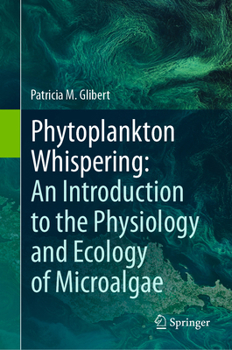
Phytoplankton Whispering: An Introduction to the Physiology and Ecology of Microalgae
No Customer Reviews

Phytoplankton, or algae, are the engines of the Earth. They form the base of the aquatic food web and, although microscopic, they produce 50% of the oxygen in the air. Many of our ideas of what makes these cells "tick" come from ideas developed decades ago. But, lakes and oceans are changing- and so, too are phytoplankton. Our understanding has to change accordingly. Nutrient pollution is a major problem worldwide, and climate is changing, altering temperature, CO2 and pH, as well as the physics that control water stratification. All of these factors control which species of phytoplankton may grow well at any particular time. While algae grow in all types of aquatic systems, not all algae are favorable for the production of fish and other food resources. The prevalence of harmful algal blooms (HABs) has increased. At the core of this effort is a drive to understand-and to convey to researchers, students and managers-what kinds of phytoplankton are likely to thrive as conditions change and why this matters. There has not yet been a synthetic summary that unravels the mysteries of phytoplankton in a modern world. This book aims to provide such a resource.
Format:Hardcover
Language:English
ISBN:303153896X
ISBN13:9783031538964
Release Date:August 2024
Publisher:Springer
Length:753 Pages
Customer Reviews
0 rating
Copyright © 2026 Thriftbooks.com
Terms of Use | Privacy Policy | Do Not Sell/Share My Personal Information | Cookie Notice | Cookie Preferences | Accessibility Statement
ThriftBooks ® and the ThriftBooks ® logo are registered trademarks of Thrift Books Global, LLC
ThriftBooks ® and the ThriftBooks ® logo are registered trademarks of Thrift Books Global, LLC
