


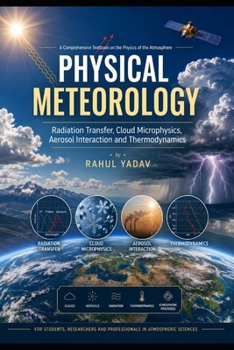
Physical Meteorology: Radiation Transfer, Cloud Microphysics, Aerosol Interaction and Thermodynamics

By Rahul Yadav
Physical Meteorology: Radiation Transfer, Cloud Microphysics, Aerosol Interaction and Thermodynamics is a comprehensive advanced textbook designed for students, researchers, meteorologists, atmospheric scientists, and climate professionals seeking a deep understanding of atmospheric physics and modern meteorology.
This book presents the complete scientific foundation of physical meteorology, beginning with atmospheric thermodynamics, radiation physics, cloud microphysics, and aerosol interactions, and extending to satellite meteorology, radar meteorology, climate physics, numerical weather prediction, atmospheric chemistry, and emerging technologies in Earth system science.
Written with detailed mathematical explanations and physical interpretations, the book bridges theoretical meteorology with practical atmospheric applications. It explains complex atmospheric processes in a systematic and accessible manner while maintaining scientific rigour suitable for university-level study and professional research.
Key Topics CoveredFundamental thermodynamics of the atmosphereAtmospheric radiation and radiative transfer theorySolar and terrestrial radiation interactionsCloud physics and precipitation microphysicsWarm and cold cloud processesAerosol-cloud-climate interactionsAtmospheric stability and convectionMesoscale meteorology and cloud dynamicsTropical cyclone physics and monsoon dynamicsSatellite meteorology and radar meteorologyClimate system physics and ENSO variabilityAtmospheric chemistry and ozone physicsNumerical weather prediction and AI in meteorologyIndian monsoon meteorology and climate changeFuture atmospheric research and emerging technologiesSpecial FeaturesDetailed derivations of major meteorological equationsAdvanced explanations of cloud microphysics and thermodynamicsRadiation transfer equations with physical interpretationComprehensive treatment of aerosols and climate interactionsNumerical modeling and machine learning applicationsDedicated chapters on Indian monsoon and tropical meteorologyAppendices containing constants, equations, cloud classification, thermodynamic tables, and research methodologyThis book serves as an essential reference for:
Undergraduate and postgraduate studentsCompetitive examination aspirantsAtmospheric researchersOperational forecastersClimate scientistsAviation meteorologistsEnvironmental scientistsCombining classical meteorological principles with modern atmospheric science and future technologies, this volume provides a complete exploration of Earth's atmosphere and its physical processes in a changing climate.
Customer Reviews
ThriftBooks ® and the ThriftBooks ® logo are registered trademarks of Thrift Books Global, LLC
