


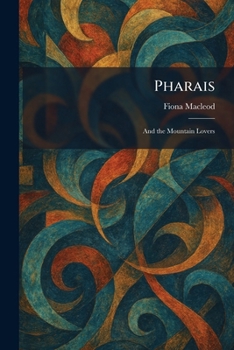
Pharais: And the Mountain Lovers

"Pharais and the Mountain Lovers" is a seminal collection of prose from the Celtic Revival, capturing the ethereal beauty and haunting mysticism of the Scottish Highlands and islands. In "Pharais", Fiona Macleod explores the profound intersection of human tragedy and the spiritual world, following the story of Alastair and Lora amid a backdrop of ancient Gaelic lore and the relentless sea. The narrative delves into themes of ancestral heritage, fate, and the spiritual weight of the landscape, rendered in the lyrical, rhythmic prose that defines the Celtic Twilight movement.
Accompanying it is "The Mountain Lovers", a pastoral romance that weaves a delicate tapestry of nature and myth. Set against the majestic peaks of the Highlands, it follows the intertwined lives of characters whose passions and sorrows are as wild and unpredictable as the terrain they inhabit. Through these works, Macleod breathes life into the folklore and soul of the north, blending the physical environment with a dreamlike, supernatural atmosphere. This volume remains a significant achievement in Scottish literature, offering readers a deep immersion into the romanticism and melancholy that characterized the Gaelic spirit at the turn of the century.
This work has been selected by scholars as being culturally important, and is part of the knowledge base of civilization as we know it. This work was reproduced from the original artifact, and remains as true to the original work as possible. Therefore, you may see the original copyright references, library stamps (as most of these works have been housed in our most important libraries around the world), and other notations in the work.
This work is in the public domain in the United States of America, and possibly other nations. Within the United States, you may freely copy and distribute this work, as no entity (individual or corporate) has a copyright on the body of the work.
As a reproduction of a historical artifact, this work may contain missing or blurred pages, poor pictures, errant marks, etc. Scholars believe, and we concur, that this work is important enough to be preserved, reproduced, and made generally available to the public. We appreciate your support of the preservation process, and thank you for being an important part of keeping this knowledge alive and relevant.
Customer Reviews
ThriftBooks ® and the ThriftBooks ® logo are registered trademarks of Thrift Books Global, LLC
