


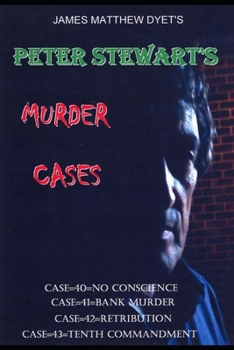
Peter Stewart's Murder Cases 40-41-42-43: Case 40-No Conscience-Case 41-Silencer-Case 42-Retribution-Case 43-Tenth Commandment

Four unsettling investigations. A suspicious death at the coroner's office. A bank robbery that turns deadly. A serial killer driven by the past. And a murderer who believes they have the right to judge others.
CASE 40 - NO CONSCIENCE
A murdered woman is brought in for examination just as the regular coroner, Simon, is suddenly taken ill.
A replacement coroner is called in to stand in for him but what should have been a routine change quickly raises questions.
As Peter Stewart looks deeper into the circumstances surrounding the woman's death, the timing begins to feel far too convenient.
Was Simon's illness simply bad luck, or is someone trying to interfere with the investigation?
With a murder already on their hands, Peter must determine whether another threat is unfolding behind the scenes.
CASE 41 - SILENCER
Inspector Roberts normally handles robberies, but this case is different.
A bank has been robbed and one of the staff members has been killed.
That is when Peter Stewart and Carol step in.
What begins as an armed robbery investigation soon becomes a murder case, with the team forced to determine whether the killing was part of the plan, an act of panic, or something far more deliberate.
The thieves may have escaped with the money, but murder leaves behind a different kind of trail.
CASE 42 - RETRIBUTION
Sometimes the wounds of the past never truly disappear.
A killer begins targeting people who remind them of those who caused pain years earlier. The victims may have done nothing wrong, yet in the murderer's mind, they have become substitutes for someone else.
As the killings continue, a terrifying pattern emerges.
A serial killer has been born not out of present-day conflict, but out of anger, resentment, and trauma carried forward from the past.
Peter must understand the connection before another innocent person is forced to pay for someone else's sins.
CASE 43 - TENTH COMMANDMENT
Anger, jealousy, and resentment can become dangerous when reality begins to distort.
When someone decides that they alone have the right to determine guilt and punishment, the result can be deadly.
A woman begins taking justice into her own hands, becoming her own judge, jury, and executioner.
Peter Stewart must uncover what is driving the murders, identify who may be next, and stop the killer before her twisted sense of justice claims another victim.
Four cases where murder hides behind authority, revenge, obsession, and opportunity and Peter Stewart must separate motive from madness before the next killing takes place.
Customer Reviews
ThriftBooks ® and the ThriftBooks ® logo are registered trademarks of Thrift Books Global, LLC
