


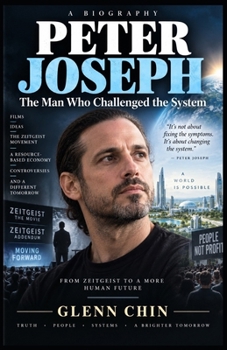
Peter Joseph: The Man Who Challenged the System

In 2007, an unknown musician uploaded a film to the internet and, almost by accident, became one of the most-watched and most-argued-about independent filmmakers of his generation. Zeitgeist made sweeping claims about religion, September 11, and the global banking system - some of them seriously wrong. It also launched an international movement, a public break with the designer whose ideas inspired it, a four-hundred-page book, an experimental film, and nearly two decades of evolving argument about money, markets, human behavior, and whether society could be built differently.
This book follows Peter Joseph from an obscure New York artist to a controversial public figure, tracing which of his claims held up, which did not, and how dramatically his methods changed along the way. It checks his religious and historical claims against specialist scholarship, his 9/11 claims against the official investigations and their critics, his account of banking against how central banks describe their own operations, and his proposed alternative to money and markets against real economic theory - without assuming his early mistakes discredit everything that followed, or that his later work proves his broader vision correct.
What emerges is neither a defense nor an attack, but a careful account of an unusual public life: a viral filmmaker who tried to become a serious social theorist, and the difficult, unresolved questions he kept asking along the way.
Was Peter Joseph right about the system? This book argues the answer was never going to be a simple yes or no.
Customer Reviews
ThriftBooks ® and the ThriftBooks ® logo are registered trademarks of Thrift Books Global, LLC
