


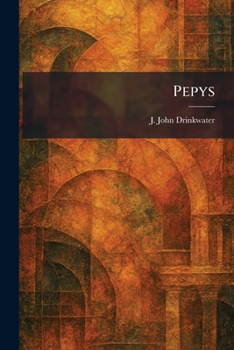
Pepys

Select Format
Select Condition 
Book Overview
"Pepys" is a compelling and comprehensive biography of the legendary 17th-century diarist and naval administrator, Samuel Pepys. Written by the acclaimed playwright and biographer John Drinkwater, this work provides a meticulous and vivid exploration of one of the most intriguing figures in English history. Drinkwater moves beyond the common perception of Pepys as merely a social observer, delving deep into his significant contributions as a dedicated public servant and his foundational role in the professionalization of the British Royal Navy.
The book chronicles the vibrant life of Pepys against the backdrop of Restoration England, capturing the political turbulence, the Great Fire of London, and the plague years. Drinkwater's narrative style brings to life the personality and complexities of a man whose private journals revolutionized our understanding of his era. Through this scholarly yet accessible account, readers gain insight into Pepys's professional integrity, his social escapades, and his enduring influence on British maritime history. "Pepys" serves as both an essential historical study and a captivating character portrait of a man who stood at the crossroads of a changing world, offering a window into the administrative and cultural heart of the 1600s.
This work has been selected by scholars as being culturally important, and is part of the knowledge base of civilization as we know it. This work was reproduced from the original artifact, and remains as true to the original work as possible. Therefore, you may see the original copyright references, library stamps (as most of these works have been housed in our most important libraries around the world), and other notations in the work.
This work is in the public domain in the United States of America, and possibly other nations. Within the United States, you may freely copy and distribute this work, as no entity (individual or corporate) has a copyright on the body of the work.
As a reproduction of a historical artifact, this work may contain missing or blurred pages, poor pictures, errant marks, etc. Scholars believe, and we concur, that this work is important enough to be preserved, reproduced, and made generally available to the public. We appreciate your support of the preservation process, and thank you for being an important part of keeping this knowledge alive and relevant.
Customer Reviews
ThriftBooks ® and the ThriftBooks ® logo are registered trademarks of Thrift Books Global, LLC
