


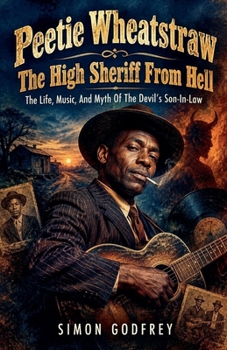
Peetie Wheatstraw: The High Sheriff from Hell

Before Robert Johnson's devil haunted the crossroads, Peetie Wheatstraw was already laughing with the Devil's daughter.
Born William Bunch, the son of Arkansas sharecroppers, Wheatstraw arrived in East St. Louis in 1929 with little more than a self-taught knowledge of piano and guitar-and a shrewd understanding of how to make himself heard. Within a year, he had transformed himself into "Peetie Wheatstraw, the Devil's Son-in-Law, the High Sheriff from Hell," one of the most distinctive and commercially successful blues personalities of the 1930s.
With more than 160 recordings to his name, Wheatstraw worked alongside some of the era's finest musicians, including Charley Jordan, Kokomo Arnold, Lonnie Johnson, Charlie McCoy, and Teddy Bunn. His rolling piano, relaxed baritone, sly humour, unforgettable "Oh, well, well " falsetto, and sharp portraits of love, gambling, drinking, hard times, violence, and survival made him a major recording artist-and inspired musicians who followed, including Robert Johnson.
Yet history has remembered Wheatstraw very differently. Where Johnson became an enduring symbol of mystery and tragedy, Wheatstraw's devil was comic, confident, and deliberately theatrical. His success, his influence, his relationship to Johnson's music, and even the circumstances of his death have too often been obscured by later myths.
Drawing on recordings, discographical evidence, historical sources, and the surviving recollections of those who knew his world, Peetie Wheatstraw: The High Sheriff from Hell restores William Bunch to his rightful place in blues history. It is the story of a gifted performer, a pioneering self-made brand, and an artist who understood that in a hard and unforgiving world, a great joke could be its own kind of power.
Know the story. Hear the blues differently.
Customer Reviews
ThriftBooks ® and the ThriftBooks ® logo are registered trademarks of Thrift Books Global, LLC
