


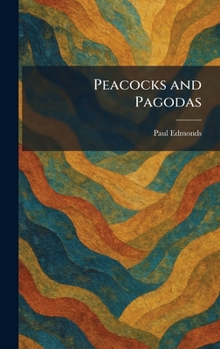
Peacocks and Pagodas

"Peacocks and Pagodas" is an evocative and charming travel narrative that offers a detailed window into the life, culture, and landscapes of Burma during the early 1920s. Written by Paul Edmonds, who also provides his own sketches to accompany the text, the work captures the author's impressions as he journeys through what was then a province of the British Indian Empire. Edmonds explores the intricate beauty of Buddhist pagodas, the daily rhythms of local markets, and the vibrant social customs of the Burmese people.
The book is more than a simple itinerary; it is a sensitive observation of a society in transition. Edmonds writes with a keen eye for detail and a lighthearted, often humorous touch, describing everything from the local music and theater to the architectural grandeur of Shwedagon. By focusing on the humanity and spirit of the people he encounters, he provides a historical record that transcends mere colonial reporting. "Peacocks and Pagodas" remains a valuable resource for those interested in Southeast Asian history, travel literature, and the enduring cultural heritage of Myanmar.
This work has been selected by scholars as being culturally important, and is part of the knowledge base of civilization as we know it. This work was reproduced from the original artifact, and remains as true to the original work as possible. Therefore, you may see the original copyright references, library stamps (as most of these works have been housed in our most important libraries around the world), and other notations in the work.
This work is in the public domain in the United States of America, and possibly other nations. Within the United States, you may freely copy and distribute this work, as no entity (individual or corporate) has a copyright on the body of the work.
As a reproduction of a historical artifact, this work may contain missing or blurred pages, poor pictures, errant marks, etc. Scholars believe, and we concur, that this work is important enough to be preserved, reproduced, and made generally available to the public. We appreciate your support of the preservation process, and thank you for being an important part of keeping this knowledge alive and relevant.
Customer Reviews
ThriftBooks® and the ThriftBooks® logo are registered trademarks of Thrift Books Global, LLC
