


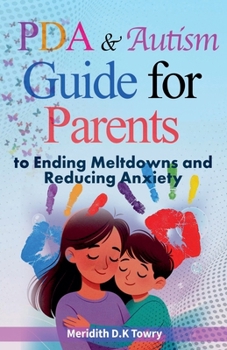
PDA and Autism Guide for Parents to Ending Meltdowns and Reducing Anxiety

Parenting a child with Pathological Demand Avoidance (PDA) and autism can feel like living in a constant state of crisis.
Simple daily moments-asking your child to brush their teeth, put on their shoes, or turn off a video game-can suddenly explode into intense resistance, anxiety, or overwhelming meltdowns. What works for other families-reward charts, consequences, firm boundaries-often seems to make things worse.
If you've ever felt like you're walking on eggshells, carefully choosing every word and action to avoid triggering the next meltdown...
If you've felt judged by others who think your child is simply being "difficult"...
If you've wondered why traditional parenting strategies seem to fail in your home...
Please hear this first: You are not failing-and your child is not broken.
Children with PDA experience the world through a nervous system that constantly scans for threats to autonomy and control. What looks like defiance is often a deeply rooted anxiety response that pushes them into fight, flight, or shutdown when they feel overwhelmed.
PDA and Autism Guide for Parents to Ending Meltdowns and Reducing Anxiety offers a compassionate, science-informed roadmap for understanding your child's brain and transforming the daily battles that leave families exhausted.
Instead of trying to force compliance, this guide teaches you how to reduce anxiety, build trust, and create a collaborative relationship where your child feels safe enough to cooperate.
Inside this powerful parenting guide, you will discover how to:
- Understand the neurological foundations of PDA and why traditional discipline backfires
- Recognize the hidden triggers that cause meltdowns before they escalate
- Use low-demand communication that reduces anxiety and increases cooperation
- Shift from control-based parenting to a partnership built on trust and safety
- Identify environmental, sensory, and emotional triggers that overwhelm your child
- Stop meltdowns earlier by recognizing the stages of the meltdown cycle
- Create low-demand routines that reduce stress and bring calm to your household
- Support your child's need for autonomy while still guiding them through daily life
This book doesn't offer unrealistic promises or rigid parenting formulas. Instead, it provides real-world strategies that respect how the PDA brain actually works-helping you move from constant conflict to calmer, more connected interactions.
As you begin applying these strategies, you will notice something powerful happen:
Your child begins to feel understood rather than controlled.
When anxiety decreases, cooperation increases. When the relationship becomes safer, the meltdowns begin to lose their intensity and frequency.
Your home can become a place of connection instead of confrontation.
This journey begins with understanding-and the right tools to support both you and your child.
If you're ready to replace daily power struggles with partnership, reduce anxiety in your household, and help your child feel safe enough to thrive,
order now and start transforming meltdowns into moments of understanding, calm, and connection.
Related Subjects
Parenting & RelationshipsCustomer Reviews
ThriftBooks ® and the ThriftBooks ® logo are registered trademarks of Thrift Books Global, LLC
