


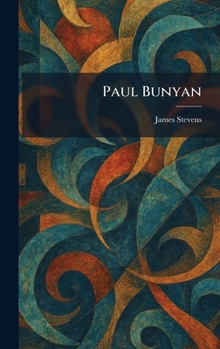
Paul Bunyan

"Paul Bunyan" is a seminal collection of tales celebrating the legendary giant lumberjack who has become a cornerstone of American folklore. Authored by James Stevens, this work brings to life the extraordinary feats and whimsical adventures of Bunyan and his loyal companion, Babe the Blue Ox, as they traverse the vast forests of North America. These stories, born from the oral traditions of logging camps, capture the rugged spirit and imaginative humor of the frontier era.
Through vivid storytelling, Stevens explores the mythic proportions of the American wilderness, portraying Bunyan not just as a worker of superhuman strength, but as a cultural icon representing the industriousness and perseverance of a growing nation. The narratives delve into the origins of natural landmarks and the camaraderie of the lumberjacks, blending history with high-spirited fantasy. As a literary exploration of tall tales, "Paul Bunyan" remains an essential piece of Americana, offering readers a glimpse into the heart of early 20th-century myth-making and the enduring power of the frontier legend.
This work has been selected by scholars as being culturally important, and is part of the knowledge base of civilization as we know it. This work was reproduced from the original artifact, and remains as true to the original work as possible. Therefore, you may see the original copyright references, library stamps (as most of these works have been housed in our most important libraries around the world), and other notations in the work.
This work is in the public domain in the United States of America, and possibly other nations. Within the United States, you may freely copy and distribute this work, as no entity (individual or corporate) has a copyright on the body of the work.
As a reproduction of a historical artifact, this work may contain missing or blurred pages, poor pictures, errant marks, etc. Scholars believe, and we concur, that this work is important enough to be preserved, reproduced, and made generally available to the public. We appreciate your support of the preservation process, and thank you for being an important part of keeping this knowledge alive and relevant.
Customer Reviews
ThriftBooks® and the ThriftBooks® logo are registered trademarks of Thrift Books Global, LLC
