


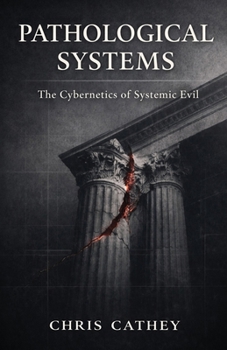
Pathological Systems: The Cybernetics of Systemic Evil

Political Ponerology is the study of political evil - how leaders without conscience transform institutions.
Developed by Polish psychologist Andrew Lobaczewski after living under totalitarian rule, Political Ponerology examines how pathological personality traits rise to power and reshape governments, corporations, and organizations from the inside.
This book expands that framework.
It explains:
- How individuals without internal moral restraint gain influence
- How small pathological minorities scale control
- How feedback channels collapse
- How moral language is redefined to protect power
- How democratic systems drift under stress
- How corporate and institutional structures become insulated
- How structural safeguards can resist capture
Political conflict is often framed as ideological disagreement. This book argues that something deeper can be at work: differences in personality structure.
Most leaders experience guilt, empathy, and internal constraint. Some do not.
When those without conscience gain structural leverage, institutions change character. Accountability narrows. Loyalty replaces competence. Truth becomes subordinate to control.
This is not a partisan argument. It is a structural analysis of power.
Understanding how pathological leadership scales into systems is essential to protecting resilient institutions.
Related Subjects
Philosophy Political Science Politics & Social Sciences Social Science Social SciencesCustomer Reviews
ThriftBooks ® and the ThriftBooks ® logo are registered trademarks of Thrift Books Global, LLC
