


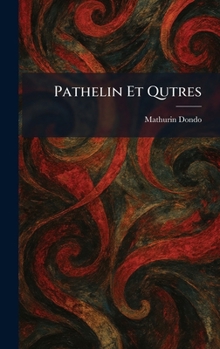
Pathelin Et Qutres

"Pathelin Et Qutres" presents a fascinating collection of early French farces, most notably featuring the classic masterpiece "La Farce de ma (R)tre Pathelin." Compiled and edited by Mathurin Dondo, this work brings to life the vibrant, irreverent, and often satirical world of 15th-century French theater. The collection showcases the wit and cunning of characters who navigate a world of deception, legal maneuvering, and social climbing, providing a window into the comedic traditions of the late Middle Ages.
Centered on the titular Master Pathelin-a wily lawyer who attempts to outsmart a draper only to be outwitted himself-the plays in this volume highlight the linguistic playfulness and structural ingenuity that defined the genre. Beyond its entertainment value, the work serves as an essential resource for those interested in the evolution of European comedy and the French literary canon. Dondo's presentation makes these historical texts accessible, preserving the rhythm and humor of the original performances while highlighting their significance as precursors to modern drama.
From slapstick humor to sharp social commentary, "Pathelin Et Qutres" captures the enduring spirit of the French farce, making it a valuable addition for students of literature, theater historians, and lovers of classic comedy.
This work has been selected by scholars as being culturally important, and is part of the knowledge base of civilization as we know it. This work was reproduced from the original artifact, and remains as true to the original work as possible. Therefore, you may see the original copyright references, library stamps (as most of these works have been housed in our most important libraries around the world), and other notations in the work.
This work is in the public domain in the United States of America, and possibly other nations. Within the United States, you may freely copy and distribute this work, as no entity (individual or corporate) has a copyright on the body of the work.
As a reproduction of a historical artifact, this work may contain missing or blurred pages, poor pictures, errant marks, etc. Scholars believe, and we concur, that this work is important enough to be preserved, reproduced, and made generally available to the public. We appreciate your support of the preservation process, and thank you for being an important part of keeping this knowledge alive and relevant.
Customer Reviews
ThriftBooks® and the ThriftBooks® logo are registered trademarks of Thrift Books Global, LLC
