


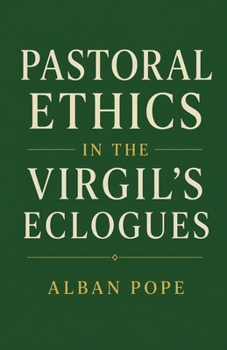
Pastoral Ethics in the Virgil's Eclogues

Pastoral poetry has long been associated with simplicity, serenity, and the imagined purity of rural life, yet Virgil's Eclogues reveal a far more intricate and ethically charged landscape. Far from offering mere escapism, the ten poems construct a world in which shepherds, poets, lovers, and political subjects grapple with questions of justice, desire, community, and artistic responsibility. This book lays the groundwork for understanding pastoral ethics as a central, animating force in the Eclogues, shaping not only the characters' interactions but also the poet's own negotiation of his historical moment. The pastoral world that Virgil creates is not a refuge from ethical complexity but a medium through which ethical tensions are refracted, intensified, and sometimes transformed.
Customer Reviews
ThriftBooks ® and the ThriftBooks ® logo are registered trademarks of Thrift Books Global, LLC
