


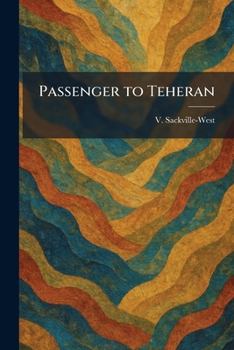
Passenger to Teheran


Select Format
Select Condition 
Book Overview
"Passenger to Teheran" is an evocative and lyrical travel memoir by the acclaimed writer V. Sackville-West. Recording her journey from England to Persia in the mid-1920s, the work offers a vivid account of a woman traveling through Egypt, Iraq, and ultimately into the heart of the Persian Empire. Sackville-West provides a keen-eyed exploration of the landscapes, cultures, and historical sites she encounters, from the bustling streets of Baghdad to the serene majesty of the Alborz Mountains.
Blending personal reflection with sharp observational detail, "Passenger to Teheran" captures a specific historical moment when the traditional East was beginning to meet the influences of the West. Sackville-West's prose is celebrated for its poetic quality and its ability to convey the sensory experiences of travel-the light, the dust, and the profound sense of place. This work remains a classic of travel literature, offering readers a window into the life of one of the 20th century's most fascinating literary figures as she navigates both the physical world and her own internal landscape. It is an essential read for those interested in the history of the Middle East, early 20th-century travel, and the development of a major literary voice.
This work has been selected by scholars as being culturally important, and is part of the knowledge base of civilization as we know it. This work was reproduced from the original artifact, and remains as true to the original work as possible. Therefore, you may see the original copyright references, library stamps (as most of these works have been housed in our most important libraries around the world), and other notations in the work.
This work is in the public domain in the United States of America, and possibly other nations. Within the United States, you may freely copy and distribute this work, as no entity (individual or corporate) has a copyright on the body of the work.
As a reproduction of a historical artifact, this work may contain missing or blurred pages, poor pictures, errant marks, etc. Scholars believe, and we concur, that this work is important enough to be preserved, reproduced, and made generally available to the public. We appreciate your support of the preservation process, and thank you for being an important part of keeping this knowledge alive and relevant.
Customer Reviews
In Love With Travel
Travel in the Golden Age with V. Sackville-West
ThriftBooks ® and the ThriftBooks ® logo are registered trademarks of Thrift Books Global, LLC
