


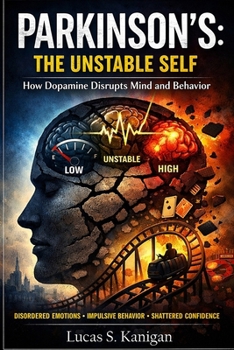
Parkinson's - The Unstable Self

Parkinson's: The Unstable Self is not a book about tremor charts, supplements, or motivational coping strategies. It is a direct, unsentimental examination of how Parkinson's disease and its treatments change the mind.
Parkinson's is usually described as a movement disorder. This book starts from a different premise: Parkinson's is a dopamine disorder, and dopamine is not just about movement. It governs motivation, emotional stability, judgment, reward, self-confidence, and impulse control. When dopamine is lost, replaced unevenly, or overstimulated by medication, the result is a predictable reshaping of personality, behavior, and identity.
This book explains those changes clearly, mechanically, and without moral judgment.
You will learn:
Why low dopamine produces apathy, emotional flattening, anxiety, validation-seeking, indecision, and a fragile sense of self
Why fluctuating dopamine creates mental whiplash-swinging between drive and exhaustion, confidence and doubt
Why levodopa can feel mentally restorative at first, yet later destabilize judgment, emotions, and relationships
How impulse control disorders (gambling, hypersexuality, compulsive spending, binge behaviors) arise as drug effects-not character failures
Why patients often lose insight into these changes while family members notice them early
How Parkinson's can alter personality in consistent, explainable ways-without blame
The book is organized around dopamine states:
Low dopamine (the "empty tank" mind)
Unstable dopamine (on/off cycles and volatility)
Medicated dopamine (relief, distortion, and risk)
Throughout, the author draws on three years of personal experience living with Parkinson's, remaining off levodopa, and actively managing progression-while clearly separating lived experience from generalizable mechanisms. The tone is factual, plain-spoken, and deliberately unsentimental.
The final chapters are practical. They focus on harm reduction:
How to reduce mental damage whether you are unmedicated or medicated
How to use structure, rules, and external safeguards when internal signals cannot be trusted
How to take levodopa in the least mentally harmful way, including stability-first strategies and continuous delivery options
How patients and families can talk about changes without blame or denial
This is not a self-help book. It does not promise cures or optimism. It does not demonize medication, but it does not protect it from criticism either.
It is a clear explanation of what is happening to the Parkinsonian mind-and how to live with that reality intelligently.
If you or someone close to you feels "not like themselves anymore," this book explains why.
Customer Reviews
ThriftBooks ® and the ThriftBooks ® logo are registered trademarks of Thrift Books Global, LLC
