


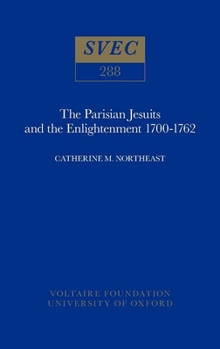
The Parisian Jesuits and the Enlightenment 1700-1762

One of the most fruitful developments in Enlightenment historiography in recent years has been an increased awareness of the social conditions of intellectual activity. Studies of 'reading, writing and publishing' in
eighteenth-century France have emphasised the shared ground between Catholics and non-Catholics by casting the philosophes in a conservative light as would-be infiltrators of existing cultural institutions. Members of the 'patrician' Enlightenment like Voltaire, Montesquieu or Diderot shared with Catholic writers common publishing constraints, common personal aspirations and, above all, common notions of the cultivated audience they wished to address. The first chapter seeks to situate the Jesuit hommes de lettres within their social environment, the literary and journalistic milieux of Paris, to consider the assumptions which governed their literary relations and to examine the limits of mutual toleration between the Society of Jesus and anti-Christian writers. This forms the essential background for the more conventional history of ideas which follows.
Customer Reviews
ThriftBooks ® and the ThriftBooks ® logo are registered trademarks of Thrift Books Global, LLC
