


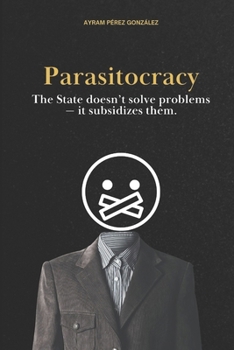
Parasitocracy: The State doesn't solve problems - it subsidizes them.

The most effective parasite does not kill the host. It keeps it alive, productive, and - in its most sophisticated version - convinced that the relationship is just.
The Western democracies of the twenty-first century have perfected that sophistication to the point of turning it into architecture: an institutionalized system of extraction, legitimized by democratic procedures and wrapped in a language of rights and solidarity that makes criticism practically impossible without incurring some form of moral stigma. The result is the modern host: a citizen who produces, pays taxes, complies, and frequently defends with conviction the conditions of their own parasitism.
Parasitocracy is the dissection of that system. A journey through its mechanisms - the institutional machine that sustains it, the degenerate democracy that legitimizes it, the Scandinavian myth that justifies it, the populism that promises to destroy it and instead reproduces it, the digital control that updates it for the twenty-first century - and through the jurisdictions that demonstrate another model is possible, even though the system prefers that demonstration not be too visible.
This is not a book that demands militancy or promises political salvation. It is a book that does the one thing no subsidy can buy and no algorithm can produce in its place: see clearly what is there, without the filters the system has built precisely so that it cannot be seen.
What the reader does with that clarity is, inevitably, their decision. But decisions made with open eyes rarely resemble those made without them.
Customer Reviews
ThriftBooks ® and the ThriftBooks ® logo are registered trademarks of Thrift Books Global, LLC
