


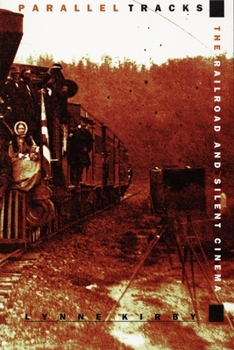
Parallel Tracks: The Railroad and Silent Cinema

Select Format
Select Condition 
Book Overview
From its earliest days, the cinema has enjoyed a special kinship with the railroad, a mutual attraction based on similar ways of handling speed, visual perception, and the promise of a journey. Parallel Tracks is the first book to explore and explain this relationship in both historical and theoretical terms, blending film scholarship with railroad history. Describing the train as a mechanical double for the cinema, Lynne Kirby gives her romantic topic a compelling twist. She views the railroad/cinema romance in light of the technological and cultural instability underlying modernity and presents the railroad and cinema as complementary experiences that shaped the modern world and its subjects--the passengers and spectators who traveled through that world. In wide-ranging and provocative analyses of dozens of silent films--icons of film history like The General and The Great Train Robbery as well as many that are rarely discussed--Kirby examines how trains and rail travel embodied concepts of spectatorship and mobility grounded in imperialism and the social, sexual, and racial divisions of modern Western culture. This analysis at the same time provides a detailed and largely unexamined history of the railroad in silent filmmaking. Kirby also devotes special attention to the similar ways in which the railroad and cinema structured the roles of men and women. As she demonstrates, these representations have had profound implications for the articulation of gender in our culture, a culture in some sense based on the machine as embodied by the train and the camera/projector. Ultimately, this book reveals the profound and parallel impact that the railroad and the cinema have had on Western society and modern urban industrial culture. Parallel Tracks will be eagerly awaited by those involved in cinema studies, American studies, feminist theory, and the cultural study of modernity.
Format:Paperback
Language:English
ISBN:0822318393
ISBN13:9780822318392
Release Date:January 1997
Publisher:Duke University Press
Length:352 Pages
Weight:1.34 lbs.
Dimensions:1.0" x 6.0" x 9.2"
Related Subjects
Arts, Music & Photography History Performing Arts Philosophy Social Science Social SciencesCustomer Reviews
1 rating
A provocative and entertaining journey of trains and film.
Published by Thriftbooks.com User , 28 years ago
Readers interested in the relationship between railroad and cinema should not look beyond Parallel Tracks, Lynne Kirby's extremely entertaining and insightful historical coverage of the how the train can be seen as a precursor to cinema. Conceptions of spectatorship, travel and suggestibililty normally associated with cinematic viewing practices are forcefully argued as inherent properties of how a passenger experiences rail travel. Perhaps a fault of the book is that it ends with the birth of sound cinema, when the whistle of the incoming train signified a new stage in cinematic representations of rail journeys, gender and identity. I highly recommend this book to anyone interested in classic American silent film, westerns and rail thrillers, as well as those interested in how the railroad continues to impact on the triad of cinema, identity and modernity.
Copyright © 2026 Thriftbooks.com
Terms of Use | Privacy Policy | Do Not Sell/Share My Personal Information | Cookie Policy | Cookie Preferences | Accessibility Statement
ThriftBooks ® and the ThriftBooks ® logo are registered trademarks of Thrift Books Global, LLC
ThriftBooks ® and the ThriftBooks ® logo are registered trademarks of Thrift Books Global, LLC
