


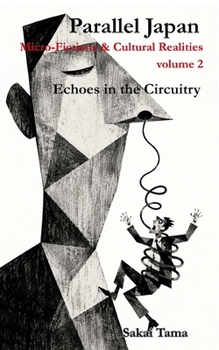
Parallel Japan: Micro-Fictions & Cultural Realities (Volume 2)

In the first volume, the cracks in everyday Japanese life were small-a mistaken hashtag, a section chief with a secret batting average, and a company group chat held hostage by otters. In Echoes in the Circuitry, the cracks have widened considerably.
A washing machine that launders by musical genre leaves a T-shirt with deliberate-looking punk damage and an existential draft. A physicist proves that time travel is possible-the vehicle is a toilet bowl, the destination is a cesspit, and the logic is, he insists, airtight. A recovery wear brand launches a line called Un-Recovery, and its users begin hallucinating beach parties, Mick Jagger impersonators, and the Battle of Okehazama-a sixteenth-century ambush in which the underdog won, which is cold comfort when you wake up stripped of the will to live.
Seven flash fiction stories, and in every one of them, a system-technological, ritual, commercial, or bureaucratic - behaves in a way its designers did not intend. The humans inside these systems adapt, endure, and occasionally emerge from a toilet bowl into early Shōwa-era Tokyo, because the physics of the situation have left them no alternative.
The essays go deeper into the machinery: the ancient roots of setsubun and the oni who shows up in tiger-print briefs; the cultural mythology surrounding Doraemon's Anywhere Door and what it reveals about Japan's relationship with time and wish-fulfillment; the vanished world of the botton benjo-Japan's cesspit toilet, still within living memory-and what its disappearance says about the speed of modernization; the history of juken sensō, Japan's examination war, and the cliff rituals it has produced; the Guitar-Type Washing Machine as a lens on Japan's enduring obsession with aesthetic categorization; and the Battle of Okehazama itself-one of Japanese history's most celebrated upsets, reimagined here as a sleep disorder.
Echoes in the Circuitry is a book about what happens when the systems we build start running on their own logic. Which, in Japan, is most of the time.
Inside this volume, you will discover:1. "A Descent into Humming Hell"
- What is Kata-tataki-ken?-The Traditional Currency of the Japanese Household
2. "Anarchy in the Laundry"
- What is Enka? - Japan's Soul Music
3. "The Demon's Underpants"
- What is Setsubun and Mame-maki?
- The Anatomy of an Oni-and the Legendary Underwear
4. "The Hole in Time"
- Doraemon and the Legendary "Time Machine"
- The Cultural Reality of "Botton Benjo" (Drop Toilets)
5. "The Door to Anywhere"
- What is Anywhere Door (Dokodemo Door)?
- The Cultural Obsession with Yubune (Soaking in the Tub)
6. "Cliffhanger Ritual Yields"
- The Reality of Juken Sensō - The Examination Hell That Driven Japan to Madness
- The Cultural Obsession with "Not Falling" - The Sacred Power of Words
7. "Un-Recovery: A Product Review"
- What is the "Battle of Okehazama"?
- The Cultural Context in the Story
Customer Reviews
ThriftBooks ® and the ThriftBooks ® logo are registered trademarks of Thrift Books Global, LLC
