


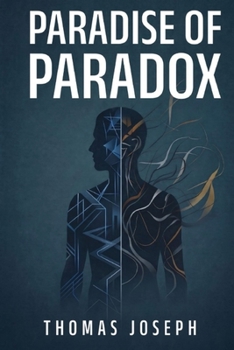
Paradise of Paradox
No Customer Reviews

Aikkarachira and Valiyadu are the countryside areas of Aymanam village in the western part of Kottayam district in central Kerala. The 'Meenachilar' (Meenachil River), which flows through many tributaries, splits into two at Nellippally. One branch flows through Aikkarachira, and the other is called Puthenthodu. In between these two rivers, the land becomes an isolated islet, comprising Aikkarachira and Valiyadu. These areas remained completely isolated and cut off from the outside world for a long time. The livelihood of the people here depends primarily on rice cultivation, cattle rearing, and inland fishing. Electricity came to this area only in 1964. The novel focuses on the life conditions of the insulars during the period 1950 to 1980. Kochuvarkey, a naive boy, unfolds the experience in a reflexive and self-conscious manner. The novel vividly narrates how the arrival of the monsoon, along with its heavy floods and sudden events, profoundly influenced their lives. The reality is that neither the elected representatives nor the successive governments had any knowledge of the thuruthu (island) or their social life. The various characters reveal the extent of the external and internal pressures of survival, constantly poised between life and death in the crucible of existence.
The characters created within the fictional family are a cross section of society, showcasing the social, spiritual, and cultural conditions of the people. Lack of quality education and prudence gave way to superstitions and moral erosion; it explains many instances in the novel. The character Kunjacko is narcissistic, while Kosepu stands as a victim of betrayal and vulnerability; at the same time, he signifies love and trust. Polarization among Kunjacko's daughters caused the downfall of the family. The dissolution of Keshavan's family was a warning to the society about the consequences of moral lapses.
The festivals and harvest seasons illustrate how people celebrated their lives. Many individuals who also passed through this era were victims of lost love. Among them, the tragic stories of Ponni and Sherly are sure to bring tears to the readers. Velu's life, on the other hand, demonstrates how unfulfilled love, when consumed by lust, can violate every social value. The novel narrates the invocation of the Communist movement on the island and its impact on the paddy fields. The life of rotti (bread) Ramu shows what a true communist should be like. The complex life of the character Udayan proves that untouchable casteism persisted in all its forms. Krishnan is a symbol of upper-caste pride who did not let go off the caste system even in times of poverty. The unique quality of the novel is that readers can discover their true selves through the characters. The characters in the novel have no connection with anyone living or dead: they are all sole creations of the writer's imagination and the social context.
Format:Paperback
Language:English
ISBN:9334533749
ISBN13:9789334533743
Release Date:November 2026
Publisher:Tjv Books
Length:230 Pages
Weight:0.69 lbs.
Dimensions:0.5" x 6.0" x 9.0"
Customer Reviews
0 rating
Copyright © 2026 Thriftbooks.com
Terms of Use | Privacy Policy | Do Not Sell/Share My Personal Information | Cookie Notice | Cookie Preferences | Accessibility Statement
ThriftBooks ® and the ThriftBooks ® logo are registered trademarks of Thrift Books Global, LLC
