


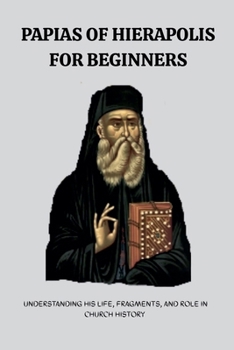
Papias of Hierapolis for Beginners

A Bishop's Voice from the Edge of the Apostolic Age
When Papias of Hierapolis (c. 60-130 AD) began preserving apostolic teachings, the eyewitnesses were dying. His five-volume work has vanished, but surviving fragments provide our earliest testimony about how the Gospels of Mark and Matthew were written.
Papias questioned those who had heard the apostles directly, traveling Asia Minor to record traditions found nowhere else. He was controversial-Irenaeus praised him as a hearer of John; Eusebius dismissed him as too literal. His vivid millennial prophecies scandalized later theologians.
Yet Papias stood at the critical junction when Christianity transitioned from oral proclamation to written Scripture. His fragments reveal how second-century Christians understood their Gospels and preserved apostolic teaching.
What You'll Learn:
How Mark recorded Peter's preaching and Matthew collected sayingsPapias's method for evaluating eyewitness testimonyHis controversial prophecies and unique apostolic traditionsEarly biblical canon formationWhy later Church Fathers abandoned his testimonyCustomer Reviews
ThriftBooks® and the ThriftBooks® logo are registered trademarks of Thrift Books Global, LLC
