


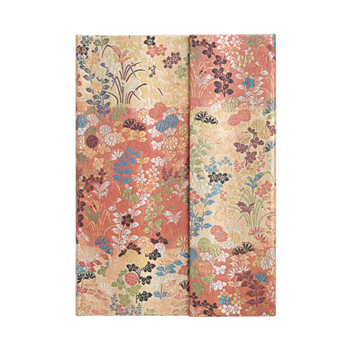
Kara-Ori MIDI Lined Hardcover Journal, 144pg, 120gsm by Paperblanks (Japanese Kimono)
No Customer Reviews

Showcasing silk dyed with beni (the pigment extracted from safflower petals) and lacquered in gold, this kimono design dates to the Edo period (1615-1868). It was originally used as a costume for the theatrical style known as Noh.Karaori refers specifically to the exquisitely embroidered woman's kimono that traditional Noh theatre was known for. Both the material itself and the pattern depicted would have helped tell the story of the character. In this case, the stiff brocade creates a thick, glossed fabric that would not drape easily - this created an angular effect evoking the spirit of a noblewoman. The pattern of flowering grasses emphasized the character's femininity.
Format:Misc.
Language:English
ISBN:143979300X
ISBN13:9781439793008
Release Date:July 2022
Publisher:Paperblanks
Length:144 Pages
Weight:0.70 lbs.
Dimensions:0.9" x 5.1" x 6.9"
Recommended
Format: Misc.
Condition: New
$14.54
Save $5.41!
List Price $19.95
Almost Gone, Only 2 Left!
Ships within 24 hours
Not eligible for Free Shipping 
Save to List
Customer Reviews
0 rating
Copyright © 2026 Thriftbooks.com Terms of Use
| Privacy Policy | Do Not
Sell/Share My Personal Information | Cookie Policy | Cookie Preferences | Accessibility Statement
ThriftBooks® and the ThriftBooks® logo are registered trademarks of Thrift Books Global, LLC
ThriftBooks® and the ThriftBooks® logo are registered trademarks of Thrift Books Global, LLC
