


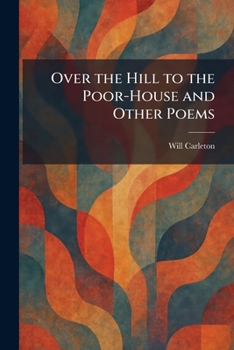
Over the Hill to the Poor-House and Other Poems

Select Format
Select Condition 
Book Overview
"Over the Hill to the Poor-House and Other Poems" is a poignant collection by Will Carleton, a poet celebrated for his ability to capture the simple, often heart-wrenching realities of rural American life. The title poem, which became one of the most famous ballads of the late 19th century, tells the moving story of an elderly woman abandoned by her children and forced to seek refuge in a public poor-house. Through his rhythmic and accessible verse, Carleton explores universal themes of family obligation, aging, and the social consequences of neglect.
Beyond its famous titular piece, this volume includes a selection of Carleton's other works that showcase his talent for narrative poetry. His writing often bridges the gap between high literature and folk balladry, reflecting the values and struggles of common people during a transformative era in American history. Readers will find evocative descriptions of domestic life, community bonds, and the quiet dignity of the working class. This collection stands as a significant example of American sentimental poetry, offering insight into the social conscience and literary tastes of a bygone era.
This work has been selected by scholars as being culturally important, and is part of the knowledge base of civilization as we know it. This work was reproduced from the original artifact, and remains as true to the original work as possible. Therefore, you may see the original copyright references, library stamps (as most of these works have been housed in our most important libraries around the world), and other notations in the work.
This work is in the public domain in the United States of America, and possibly other nations. Within the United States, you may freely copy and distribute this work, as no entity (individual or corporate) has a copyright on the body of the work.
As a reproduction of a historical artifact, this work may contain missing or blurred pages, poor pictures, errant marks, etc. Scholars believe, and we concur, that this work is important enough to be preserved, reproduced, and made generally available to the public. We appreciate your support of the preservation process, and thank you for being an important part of keeping this knowledge alive and relevant.
Related Subjects
PoetryCustomer Reviews
ThriftBooks ® and the ThriftBooks ® logo are registered trademarks of Thrift Books Global, LLC
