


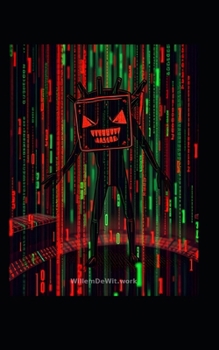
Outrage Machine: How Algorithms Hijacked Democracy - and How Citizens Can Take It Back

Democracy was never designed for the algorithm.
In the twenty-first century, public opinion no longer takes shape in town halls or on newspaper pages. It is forged in feeds and timelines, where outrage is the currency and algorithms are the new editors. What happens when the loudest voices rise to the top, when lies outrun the law, and when truth itself becomes negotiable?
In Outrage Machine, cultural analyst Willem DeWit offers a gripping, accessible guide to how democracies are being reshaped - and endangered - by the digital platforms that dominate our daily lives. From Facebook and TikTok to YouTube and X, these platforms thrive on extremes. They amplify anger, reward division, and exhaust citizens with endless noise. Yet DeWit argues that crisis can also be catalyst. The same forces that weaken democracy may also push us to reinvent it.
Structured around seven vivid "lenses," the book combines storytelling, case studies, and bold metaphors to chart both the threats and the possibilities:
Algorithms as the New Populists - why machines behave like demagogues, and how democracies can respond.
Democracy's Immune System - how fact-checkers, citizens, and culture itself can act as antibodies against viral lies.
The Lost Art of Slowness - why democracy depends on patience, compromise, and time.
Public Squares, Not Private Casinos - how to reclaim digital spaces from addictive, profit-driven design.
Emotional Gymnastics for Citizens - why emotional fitness is as vital as critical thinking in the age of manipulation.
Turning Echo Chambers into Campfires - how storytelling and dialogue can rebuild shared reality.
The Power of the Glitch - why imperfection, disruption, and unpredictability are democracy's hidden strengths.
Drawing on examples from Finland, Taiwan, the Philippines, Ireland, New Zealand, and the United States, Outrage Machine shows that renewal is possible. Democracies have always stumbled in moments of media disruption - the printing press, the telegraph, radio, television - and yet adapted, often emerging stronger. The challenge of algorithmic populism may be the hardest yet, but also the most transformative.
This is not a book of despair. It is a call to action. DeWit reminds us that democracy is not defended "out there" by elites, but in everyday habits: the pause before sharing, the patience to listen, the courage to laugh at manipulation, the willingness to embrace imperfection.
Urgent, hopeful, and deeply human, Outrage Machine speaks to policymakers and educators, but above all to citizens. It argues that while platforms are powerful, they are not destiny. Outrage can be resisted. Trust can be rebuilt. Public squares can be reclaimed. And democracy, fragile as it is, can still breathe, adapt, and surprise us.
If you've ever wondered why politics feels so chaotic online, why lies seem unstoppable, or how ordinary people can make a difference, this book offers both clarity and courage.
Outrage may be the machine's fuel. But renewal is still in our hands.
Related Subjects
HistoryCustomer Reviews
ThriftBooks ® and the ThriftBooks ® logo are registered trademarks of Thrift Books Global, LLC
