


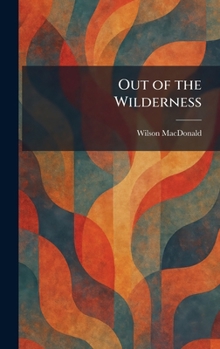
Out of the Wilderness

"Out of the Wilderness" is a seminal collection of poetry by Wilson MacDonald, one of Canada's most celebrated literary voices of the early twentieth century. This work captures the raw beauty and spiritual essence of the Canadian landscape, weaving together themes of natural wonder, solitude, and the enduring human spirit. MacDonald's verses are celebrated for their rhythmic vitality and deep emotional resonance, offering readers a profound exploration of the world beyond the constraints of urban civilization.
The collection showcases MacDonald's mastery of lyricism, as he finds inspiration in the rugged terrain, the changing seasons, and the quietude of the forest. Through his evocative language, the poet invites us to rediscover our intrinsic connection to the environment and to find solace in the untamed spaces of the north. "Out of the Wilderness" remains a cornerstone of Canadian literature, reflecting a period of national self-discovery and an artistic commitment to the preservation of natural majesty. It is an essential read for lovers of nature poetry and those interested in the heritage of North American letters.
This work has been selected by scholars as being culturally important, and is part of the knowledge base of civilization as we know it. This work was reproduced from the original artifact, and remains as true to the original work as possible. Therefore, you may see the original copyright references, library stamps (as most of these works have been housed in our most important libraries around the world), and other notations in the work.
This work is in the public domain in the United States of America, and possibly other nations. Within the United States, you may freely copy and distribute this work, as no entity (individual or corporate) has a copyright on the body of the work.
As a reproduction of a historical artifact, this work may contain missing or blurred pages, poor pictures, errant marks, etc. Scholars believe, and we concur, that this work is important enough to be preserved, reproduced, and made generally available to the public. We appreciate your support of the preservation process, and thank you for being an important part of keeping this knowledge alive and relevant.
Related Subjects
PoetryCustomer Reviews
ThriftBooks ® and the ThriftBooks ® logo are registered trademarks of Thrift Books Global, LLC
