


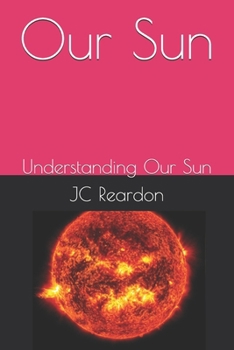
Our Sun: Understanding Our Sun
No Customer Reviews

The Sun is the star at the center of our solar system and the most important source of energy for life on Earth. Here's everything you need to know about it: Basic FactsType: G-type main-sequence star (G2V)Diameter: 1.39 million km ( 109 times Earth's diameter)Mass: 1.989 103⁰ kg ( 330,000 times Earth's mass)Age: 4.6 billion yearsDistance from Earth: 149.6 million km (93 million miles)Surface Temperature: 5,500 C (9,932 F)Core Temperature: 15 million C (27 million F)Composition: 74% hydrogen, 24% helium, with trace amounts of heavier elements Structure of the Sun
The Sun is made up of different layers, each playing a crucial role in its function:
1. CoreThe hottest part of the Sun ( 15 million C)Where nuclear fusion occurs (hydrogen atoms fuse into helium, releasing immense energy)2. Radiative ZoneEnergy from the core moves outward slowly (can take thousands to millions of years to escape)3. Convective ZoneHot gases rise and cooler gases sink, creating convection currents4. PhotosphereThe visible surface of the SunWhere sunspots (cooler, darker areas) form5. ChromosphereA thin, reddish layer above the photosphereVisible during solar eclipses6. CoronaThe Sun's outermost atmosphereExtends millions of kilometers into spaceOnly visible during a total solar eclipse Solar Phenomena
1. SunspotsDark, cooler regions on the Sun's surface caused by magnetic activityCan last from days to months2. Solar FlaresSudden bursts of energy and radiation from the Sun's surfaceCan disrupt communication and power systems on Earth3. Coronal Mass Ejections (CMEs)Massive bursts of plasma and magnetic field released into spaceCan cause geomagnetic storms on Earth, affecting satellites and power grids4. Solar WindA stream of charged particles flowing outward from the SunCauses the auroras (Northern and Southern Lights) when interacting with Earth's atmosphere The Sun's Role in Our Solar SystemProvides Light & Heat: Essential for life on Earth.Drives Weather & Climate: The Sun's energy powers Earth's weather systems.Controls Orbits: The Sun's gravity keeps planets, asteroids, and comets in orbit.Influences Space Weather: Solar activity affects satellites, astronauts, and power grids. The Sun's FutureIn about 5 billion years, the Sun will exhaust its hydrogen fuel.It will expand into a red giant, engulfing Mercury, Venus, and possibly Earth.Eventually, it will shed its outer layers and become a white dwarf, cooling over billions of years.
The Sun is made up of different layers, each playing a crucial role in its function:
1. CoreThe hottest part of the Sun ( 15 million C)Where nuclear fusion occurs (hydrogen atoms fuse into helium, releasing immense energy)2. Radiative ZoneEnergy from the core moves outward slowly (can take thousands to millions of years to escape)3. Convective ZoneHot gases rise and cooler gases sink, creating convection currents4. PhotosphereThe visible surface of the SunWhere sunspots (cooler, darker areas) form5. ChromosphereA thin, reddish layer above the photosphereVisible during solar eclipses6. CoronaThe Sun's outermost atmosphereExtends millions of kilometers into spaceOnly visible during a total solar eclipse Solar Phenomena
1. SunspotsDark, cooler regions on the Sun's surface caused by magnetic activityCan last from days to months2. Solar FlaresSudden bursts of energy and radiation from the Sun's surfaceCan disrupt communication and power systems on Earth3. Coronal Mass Ejections (CMEs)Massive bursts of plasma and magnetic field released into spaceCan cause geomagnetic storms on Earth, affecting satellites and power grids4. Solar WindA stream of charged particles flowing outward from the SunCauses the auroras (Northern and Southern Lights) when interacting with Earth's atmosphere The Sun's Role in Our Solar SystemProvides Light & Heat: Essential for life on Earth.Drives Weather & Climate: The Sun's energy powers Earth's weather systems.Controls Orbits: The Sun's gravity keeps planets, asteroids, and comets in orbit.Influences Space Weather: Solar activity affects satellites, astronauts, and power grids. The Sun's FutureIn about 5 billion years, the Sun will exhaust its hydrogen fuel.It will expand into a red giant, engulfing Mercury, Venus, and possibly Earth.Eventually, it will shed its outer layers and become a white dwarf, cooling over billions of years.
Format:Paperback
Language:English
ISBN:B0F38G3QD1
ISBN13:9798316299454
Release Date:March 2025
Publisher:Independently Published
Length:286 Pages
Weight:0.85 lbs.
Dimensions:0.6" x 6.0" x 9.0"
Customer Reviews
0 rating
Copyright © 2026 Thriftbooks.com
Terms of Use | Privacy Policy | Do Not Sell/Share My Personal Information | Cookie Policy | Cookie Preferences | Accessibility Statement
ThriftBooks ® and the ThriftBooks ® logo are registered trademarks of Thrift Books Global, LLC
ThriftBooks ® and the ThriftBooks ® logo are registered trademarks of Thrift Books Global, LLC
