


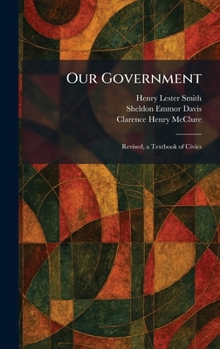
Our Government: Revised, a Textbook of Civics

"Our Government: Revised, a Textbook of Civics" provides a comprehensive exploration of the American political system and the responsibilities of its citizens. Written as an essential guide for students, this work delves into the foundational principles of democracy, the intricacies of the United States Constitution, and the functional branches of local, state, and federal government. Through clear explanations and structured lessons, the authors aim to cultivate a well-informed electorate by examining the practical applications of law, public administration, and community involvement.
The text serves as a significant historical reflection of civic education, showcasing the pedagogical approaches and political priorities of the early 20th century. It covers essential topics such as the electoral process, taxation, public health, and the judicial system, offering readers a window into how the ideals of American governance were communicated to students of the era. "Our Government: Revised, a Textbook of Civics" remains a valuable resource for those interested in the history of political education and the evolving understanding of what it means to participate in a democratic society.
This work has been selected by scholars as being culturally important, and is part of the knowledge base of civilization as we know it. This work was reproduced from the original artifact, and remains as true to the original work as possible. Therefore, you may see the original copyright references, library stamps (as most of these works have been housed in our most important libraries around the world), and other notations in the work.
This work is in the public domain in the United States of America, and possibly other nations. Within the United States, you may freely copy and distribute this work, as no entity (individual or corporate) has a copyright on the body of the work.
As a reproduction of a historical artifact, this work may contain missing or blurred pages, poor pictures, errant marks, etc. Scholars believe, and we concur, that this work is important enough to be preserved, reproduced, and made generally available to the public. We appreciate your support of the preservation process, and thank you for being an important part of keeping this knowledge alive and relevant.
Customer Reviews
ThriftBooks ® and the ThriftBooks ® logo are registered trademarks of Thrift Books Global, LLC
