


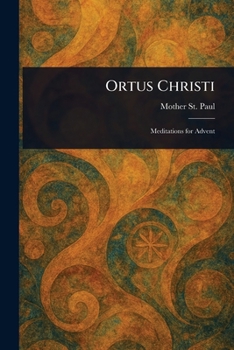
Ortus Christi

Select Format
Select Condition 
Book Overview
Prepare your heart for the Advent season with "Ortus Christi: Meditations for Advent" by Mother St. Paul. This timeless collection of Christian meditations offers spiritual guidance and reflection in the days leading up to Christmas. Delve into thoughtful passages designed to enrich your understanding of Christ's birth and its profound significance.
A classic work of Christian spirituality, "Ortus Christi" provides a pathway for deeper prayer and connection with the divine during this sacred time. Explore the themes of Christology and prepare your soul for the joy of Christmas through these carefully crafted meditations. Mother St. Paul's insightful words invite readers to contemplate the true meaning of Advent, fostering a spirit of peace and anticipation. A valuable resource for anyone seeking religious enrichment and a more meaningful celebration of the season.This work has been selected by scholars as being culturally important, and is part of the knowledge base of civilization as we know it.
This work is in the public domain in the United States of America, and possibly other nations. Within the United States, you may freely copy and distribute this work, as no entity (individual or corporate) has a copyright on the body of the work.
Scholars believe, and we concur, that this work is important enough to be preserved, reproduced, and made generally available to the public. We appreciate your support of the preservation process, and thank you for being an important part of keeping this knowledge alive and relevant.
Customer Reviews
ThriftBooks ® and the ThriftBooks ® logo are registered trademarks of Thrift Books Global, LLC
