


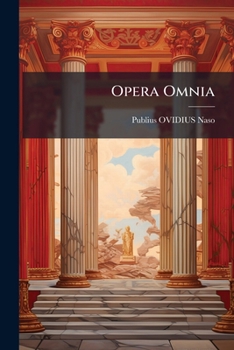
Opera Omnia

Select Format
Select Condition 
Book Overview
This comprehensive collection, "Opera Omnia", brings together the complete works of Publius Ovidius Naso, more commonly known as Ovid, one of the greatest poets of Roman antiquity. Celebrated for his wit, inventiveness, and profound influence on Western literature, Ovid's writings offer a rich tapestry of mythology, love, and human experience.
Included in this volume are iconic works such as "Metamorphoses," a sweeping epic poem that recounts the transformations of figures from mythology and legend; the "Amores," a collection of love poems exploring the passions and complexities of romantic relationships; and "Heroides," a series of epistolary poems in the voices of mythological heroines writing to their absent lovers. Also featured are "Ars Amatoria" (The Art of Love), a witty and satirical guide to seduction, and "Tristia" and "Epistulae ex Ponto", poignant reflections on exile.
This collection is an essential resource for scholars, students, and anyone interested in classical literature and the enduring legacy of Roman culture. "Opera Omnia" showcases Ovid's mastery of language and his profound insights into the human condition, making it a cornerstone of any literary collection.
This work has been selected by scholars as being culturally important, and is part of the knowledge base of civilization as we know it. This work was reproduced from the original artifact, and remains as true to the original work as possible. Therefore, you will see the original copyright references, library stamps (as most of these works have been housed in our most important libraries around the world), and other notations in the work.
This work is in the public domain in the United States of America, and possibly other nations. Within the United States, you may freely copy and distribute this work, as no entity (individual or corporate) has a copyright on the body of the work.
As a reproduction of a historical artifact, this work may contain missing or blurred pages, poor pictures, errant marks, etc. Scholars believe, and we concur, that this work is important enough to be preserved, reproduced, and made generally available to the public. We appreciate your support of the preservation process, and thank you for being an important part of keeping this knowledge alive and relevant.
Related Subjects
HistoryCustomer Reviews
ThriftBooks ® and the ThriftBooks ® logo are registered trademarks of Thrift Books Global, LLC
