


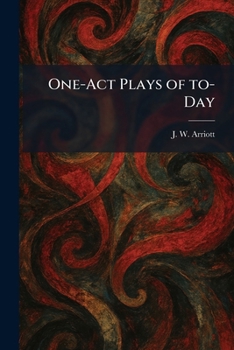
One-Act Plays of To-Day

Select Format
Select Condition 
Book Overview
"One-Act Plays of to-Day" is a quintessential anthology that captures the vibrant spirit and technical mastery of early twentieth-century theatre. Curated by J.W. Marriott, this collection showcases the diversity of the one-act format, a genre that demands exceptional precision and narrative economy. The volume brings together a wide array of dramatic works, ranging from biting social satires and lighthearted comedies to intense psychological dramas and tragedies. Each selection reflects the artistic and cultural shifts occurring during this formative period in dramatic history.
As a resource for both the student of literature and the practitioner of the stage, "One-Act Plays of to-Day" offers profound insight into the development of modern characterization and dialogue. The works included illustrate the transition from traditional Victorian sensibilities toward the experimental and realistic modes that would come to define modernism. By emphasizing the literary merit and performance potential of the short play, this collection serves as a vital record of the era's most compelling voices in English-language theatre. Readers will discover how these playwrights used the limited timeframe of a single act to explore complex themes of human nature, society, and the burgeoning complexities of the modern world.
This work has been selected by scholars as being culturally important, and is part of the knowledge base of civilization as we know it. This work was reproduced from the original artifact, and remains as true to the original work as possible. Therefore, you may see the original copyright references, library stamps (as most of these works have been housed in our most important libraries around the world), and other notations in the work.
This work is in the public domain in the United States of America, and possibly other nations. Within the United States, you may freely copy and distribute this work, as no entity (individual or corporate) has a copyright on the body of the work.
As a reproduction of a historical artifact, this work may contain missing or blurred pages, poor pictures, errant marks, etc. Scholars believe, and we concur, that this work is important enough to be preserved, reproduced, and made generally available to the public. We appreciate your support of the preservation process, and thank you for being an important part of keeping this knowledge alive and relevant.
Related Subjects
DramaCustomer Reviews
ThriftBooks ® and the ThriftBooks ® logo are registered trademarks of Thrift Books Global, LLC
